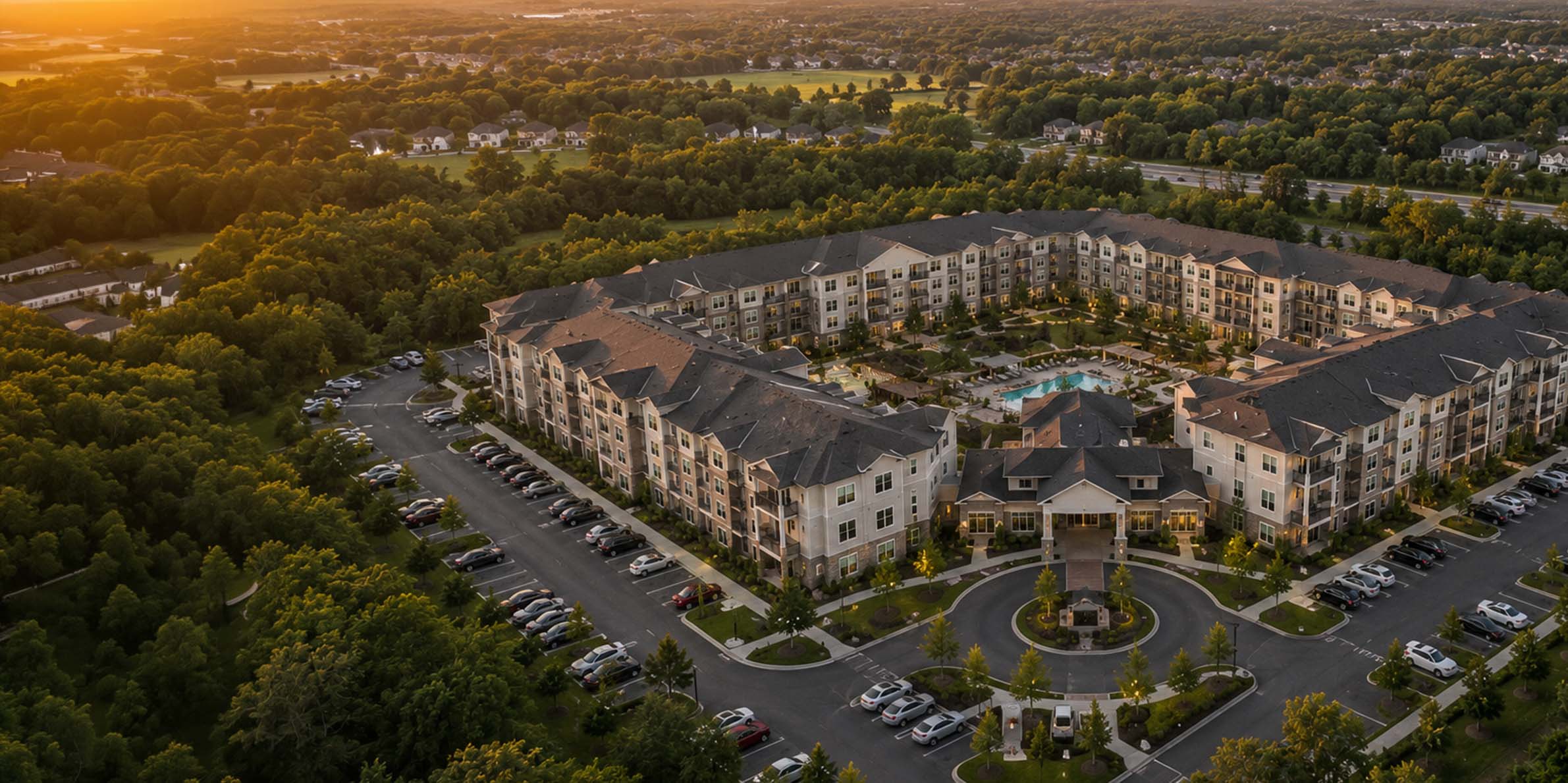
Aerial view of a large U-shaped apartment complex with a central pool and surrounded by greenery at sunset.

Fire and life safety services for MULTI-FAMILY RESIDENTIAL communities


SAFETY WHERE LIFE HAPPENS
Securing the community where your residents live and thrive.
For your residents, this isn't just a building. It's home. You manage their safety every day. We make that responsibility lighter.
Every floor protected. Every resident considered. Every system trusted.
CONTACT FORTIS
Multi-family living presents unique risks. Hundreds of lives under one roof. Shared kitchens. High-traffic hallways. Complex floor plans. You need a fire and life safety partner who understands that the stakes are personal. Ironclad protection that respects your residents' privacy and your bottom line. Complete protection for every floor. From high-rise apartments to sprawling condo complexes, Fortis delivers the trust you need to keep your community safe.
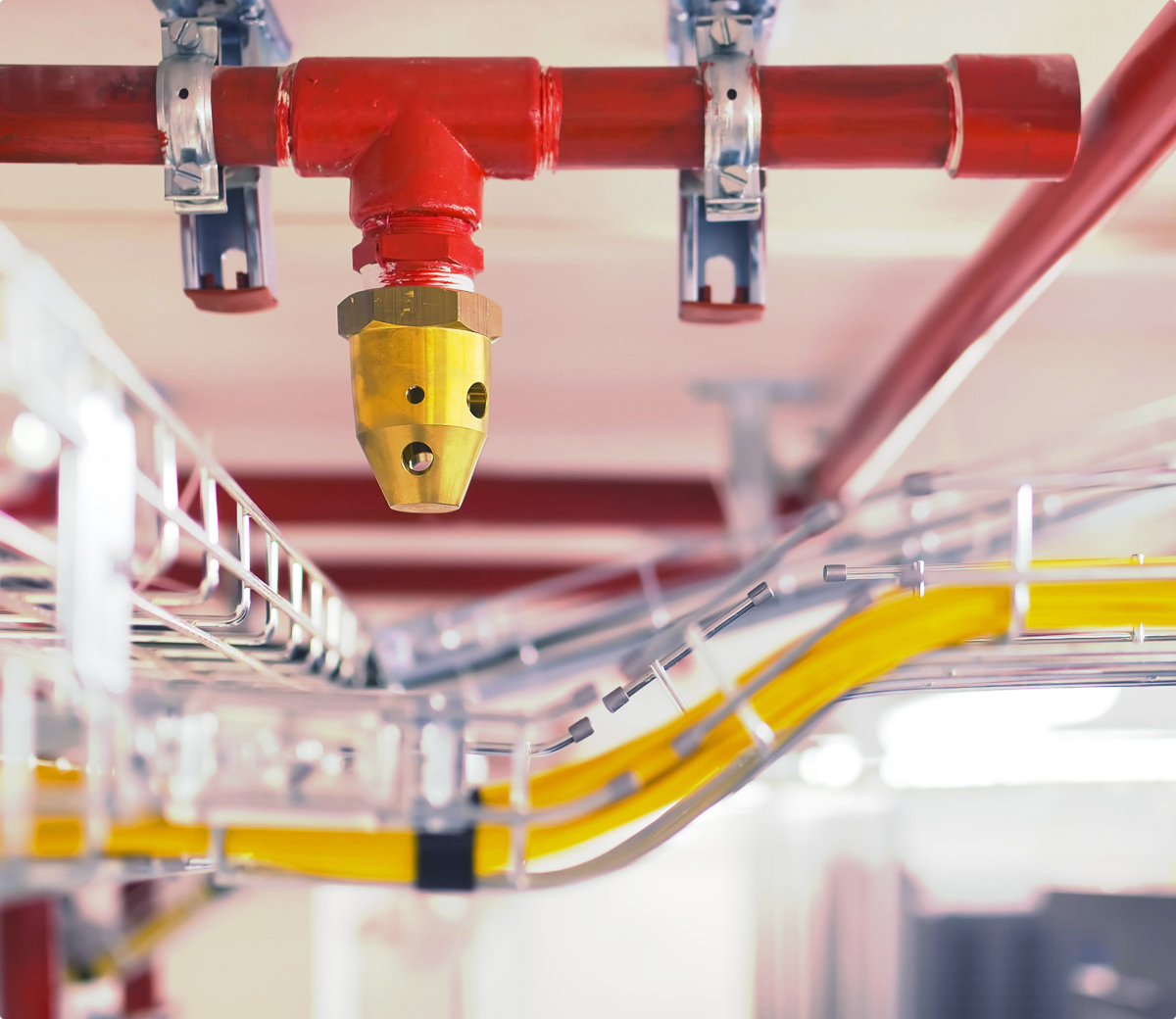
Close-up of a red fire sprinkler head mounted on a ceiling pipe.
What fire and life safety requirements apply to apartment buildings and multi-family residential communities?

Multi-family residential buildings — including apartment complexes, condominiums, and mixed-use residential properties — are governed by NFPA 101 (Life Safety Code), NFPA 13 or NFPA 13R (sprinkler systems, depending on building height and type), and NFPA 72 (fire alarm systems), with state and local building and fire codes layering additional requirements on top.

Required systems typically include fire sprinkler systems in buildings over a specified height or occupancy threshold, fire alarm systems with monitored communication to emergency services, smoke detectors in all dwelling units, and carbon monoxide detection where required by local code.

Property managers are responsible for maintaining documented inspection programs for all common area and building-wide systems, while ensuring resident-unit systems remain functional.

Contact Fortis

Who Manages Fire & Life Safety for Residential Communities

They Chose This Building as Their Home.
You Chose to Be Responsible for It.
Property managers, asset owners, HOA boards, and developers all carry fire and life safety accountability in multi-family environments — and the residents who depend on those systems have no backup plan if they fail.

Property Managers & Community Directors

Property managers carry direct accountability for fire and life safety compliance across residential communities — managing inspection schedules, coordinating with local fire marshals, and ensuring that building systems remain fully operational without creating the resident-facing disruption that poorly managed maintenance produces. Fortis makes that responsibility lighter.

Asset Managers & Ownership Groups

Multi-family asset managers and owners view fire and life safety compliance through a risk and value lens. Open inspection deficiencies, aging infrastructure, and compliance failures all represent liability exposure, insurance cost implications, and asset value risk. Fortis provides portfolio-level compliance programs that protect both the residents and the investment.

HOA Boards & Condo Association Management

Homeowner associations and condominium boards carry compliance obligations for common area fire and life safety systems — often with limited technical expertise and governance structures that require clear, board-level reporting. Fortis provides HOA-specific service programs with documentation structured for board review and resident communication.

Developers & General Contractors

Multi-family developers need fire and life safety systems designed for the building program from the ground up — integrated with the architectural design, coordinated with construction schedules, and commissioned to satisfy certificate of occupancy requirements. Fortis provides design-build services for new multi-family development.

Relevant Services for Residential Communities

Complete Community Protection. One Provider.
Zero Disruption.
From building-wide alarm systems and NFPA 13R sprinkler programs to controlled access security and 24/7 emergency response — Fortis manages every fire and life safety discipline a residential community requires, on coordinated schedules, with resident impact as a primary consideration.
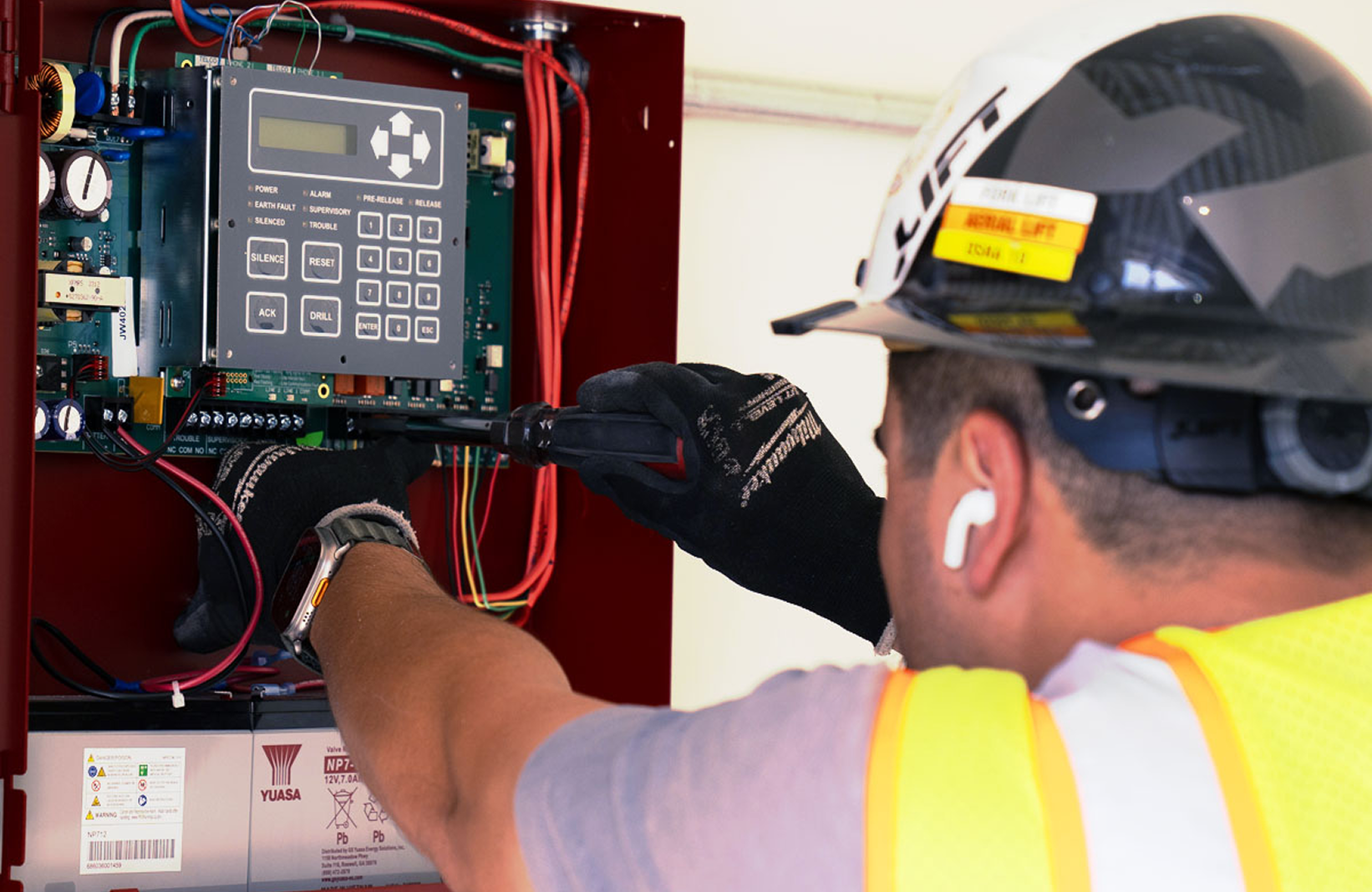
Technician wearing gloves and helmet using screwdriver to work on electrical control panel.

Fire Alarm Systems

Building-wide addressable alarm systems with monitored communication to UL-listed central stations. Smoke and CO detection for all dwelling units. Voice evacuation for high-rise residential buildings. NFPA 72-compliant inspection and testing programs scheduled to minimize resident disruption. Documentation structured for fire marshal review and insurance carrier compliance.
More about Fire Alarm Systems
Close-up of a red fire sprinkler head mounted on a ceiling pipe.

Fire Sprinkler Systems

NFPA 13 systems for mid-rise and high-rise residential buildings; NFPA 13R systems for low-rise multi-family properties where applicable. Inspection and maintenance programs that satisfy local fire marshal requirements. Emergency response for accidental activations and sprinkler head damage — one of the most common emergency service needs in residential environments.
More about Fire Sprinkler Systems
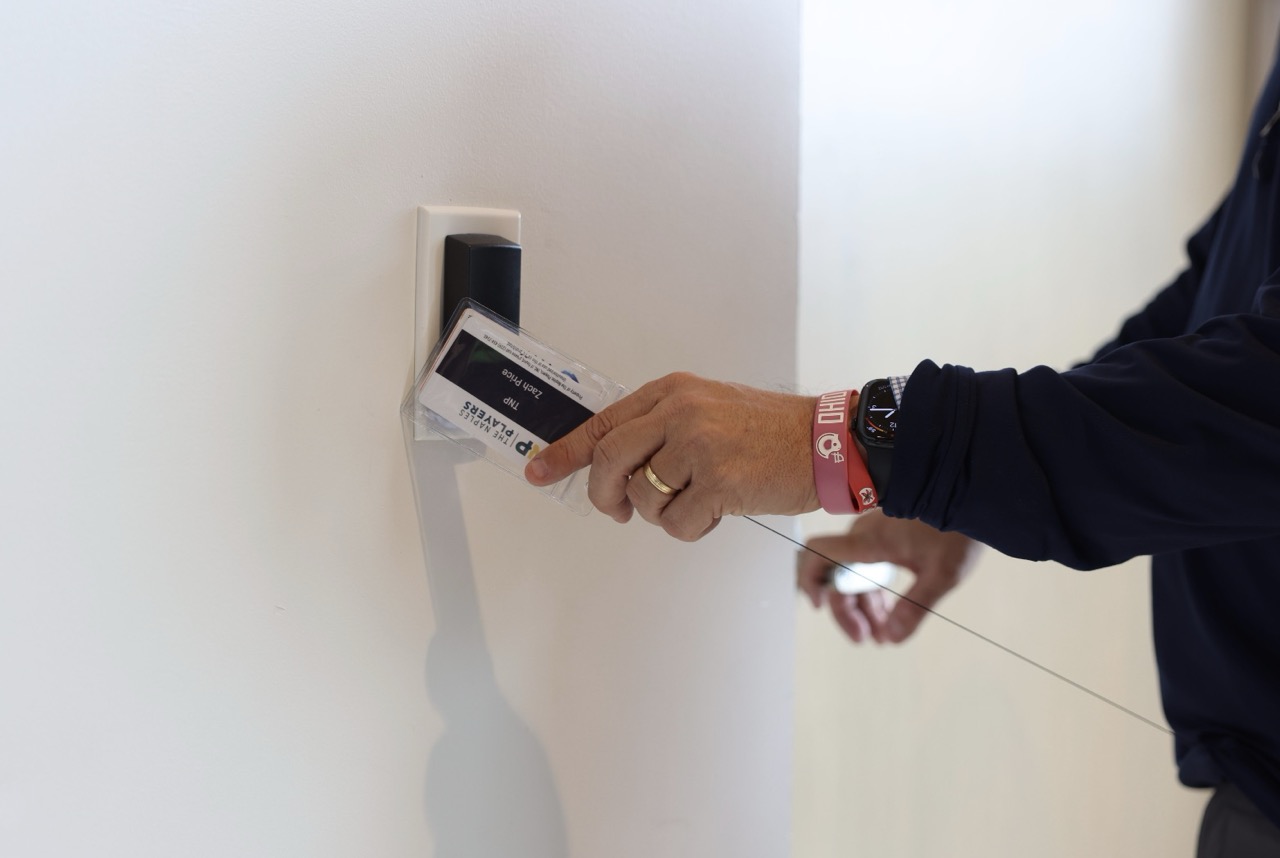
Person holding an ID badge to a wall-mounted card reader for access control.

Security Systems

Controlled access at all exterior entry points — lobby, parking, amenity areas, and package rooms. High-definition surveillance for common areas, parking facilities, and exterior perimeters. Video intercom systems for visitor management. 24/7 monitoring for after-hours security coverage. Package delivery security solutions for communities with high delivery volume.
More about Security Systems
Smiling woman wearing headset, holding and looking at a tablet in an office setting.

24/7 Emergency Service

Around-the-clock emergency response for system failures at any hour — because a fire alarm panel fault or sprinkler leak at 2am in a residential building cannot wait until morning. Locally based technicians respond immediately to restore protection and compliance.
More about 24/7 Emergency Service

Code & Compliance for Residential Communities
Every State Has Its Own Requirements. We Know them all.
Multi-family residential compliance spans NFPA 101, NFPA 13R, NFPA 72, and state and local building codes — with sprinkler requirements, carbon monoxide detection obligations, and inspection frequency standards that vary significantly by building type and jurisdiction.
Close-up of a red fire sprinkler pipe with a brass sprinkler head attached to ceiling pipes.

NFPA 101

(Life Safety Code) establishes requirements for means of egress, sprinkler systems, and fire alarm systems in residential occupancies — with specific provisions for high-rise residential buildings, apartment buildings, and mixed-use properties.

NFPA 13R

(Standard for the Installation of Sprinkler Systems in Low-Rise Residential Occupancies) provides a simplified sprinkler standard for residential buildings up to four stories — balancing protection requirements with the cost realities of residential construction.

NFPA 72

governs fire alarm systems in residential occupancies, including requirements for monitored systems, smoke detector placement in dwelling units, and carbon monoxide detection where required by local code.

State and local building codes

add significant jurisdiction-specific requirements — particularly around sprinkler retrofit obligations for existing buildings, carbon monoxide detection, and inspection frequency requirements for residential fire alarm systems.
Insurance carrier requirements for multi-family properties often include specific inspection documentation standards and deficiency remediation timelines. Fortis inspection programs are designed to satisfy carrier requirements alongside code obligations.
Contact Fortis

how it works

here to help, every step of the way
1

Property Assessment

Fortis begins every multi-family engagement with a comprehensive assessment of building systems — evaluating current compliance status, identifying deficiencies, and developing a maintenance and remediation plan that accounts for building occupancy and resident impact.
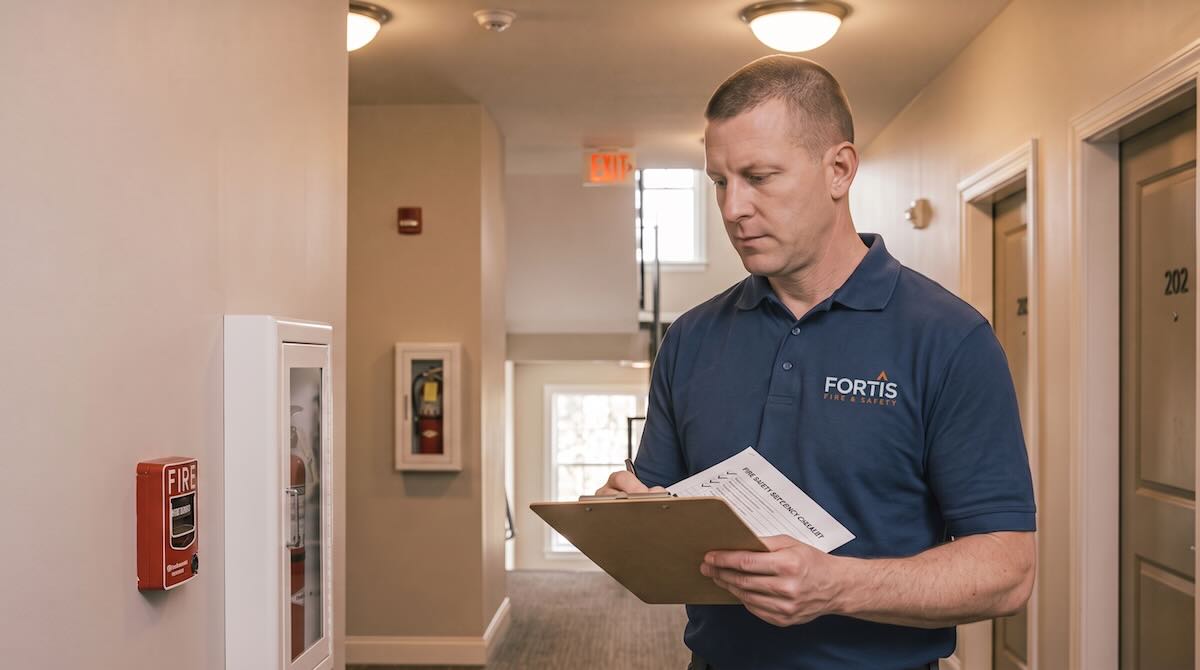
Man in Fortis uniform checking fire safety equipment and filling a checklist on a clipboard in a hallway.
2

Resident-Aware Scheduling

All inspection, testing, and maintenance activity is scheduled with resident impact as a primary consideration — advance notice for alarm tests, off-hours scheduling for intrusive work, and coordination with property management on resident communication. Fortis minimizes disruption while maximizing system integrity.
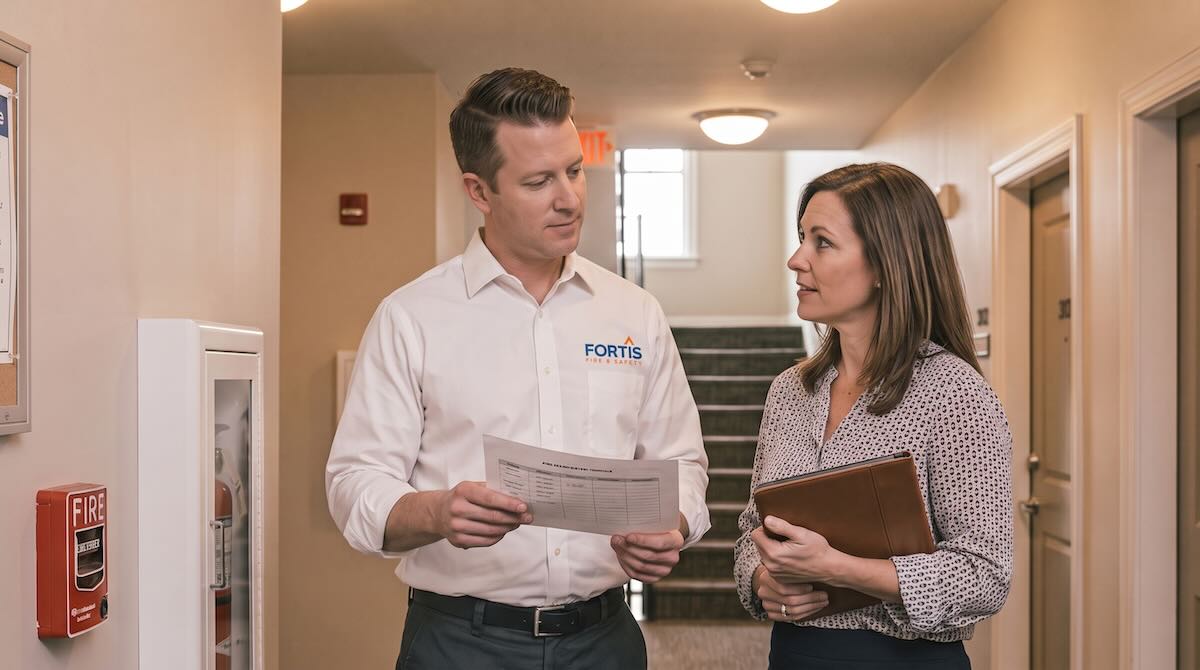
Man in Fortis shirt discussing paper with woman holding a folder in an apartment hallway.
3

Ongoing Compliance Management

Annual and semi-annual inspection programs with digital documentation — clear reporting in formats that satisfy fire marshal requirements, insurance carrier review, and HOA or ownership compliance records. Open deficiency tracking with remediation timelines so nothing falls through the cracks.
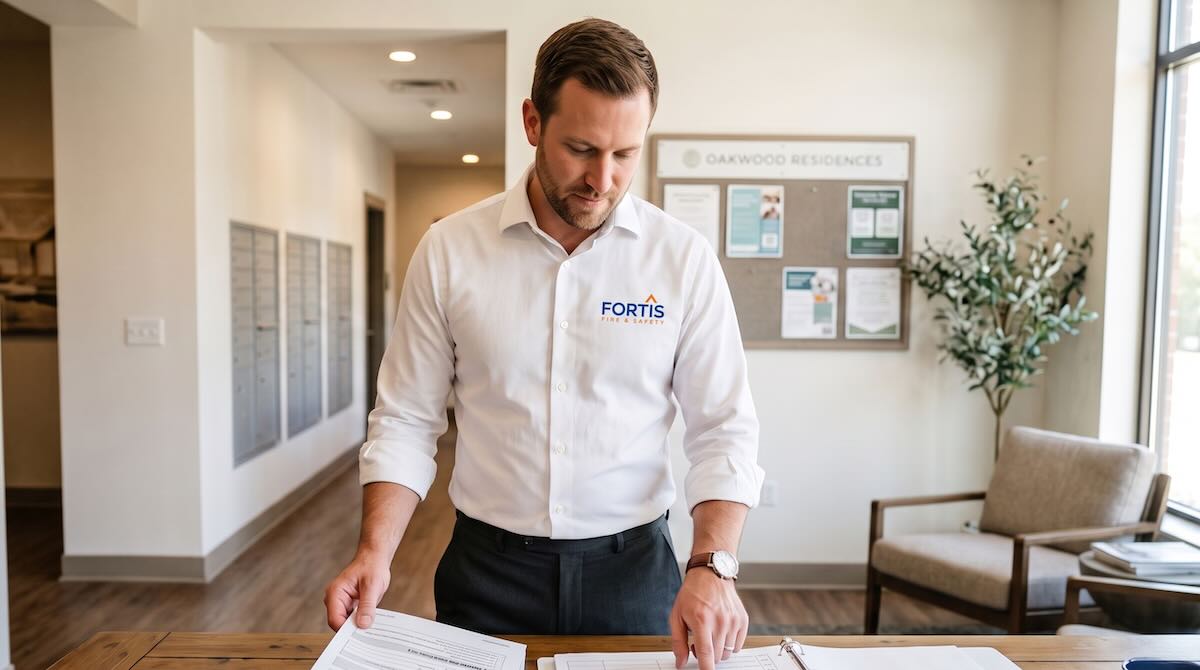
Man in Fortis Fire & Safety shirt reviewing documents on a table in a residential lobby.
4

Emergency Response

24/7 emergency response for system failures, accidental activations, and sprinkler head damage — with locally based technicians who understand residential environments and the urgency of restoring protection in occupied buildings.
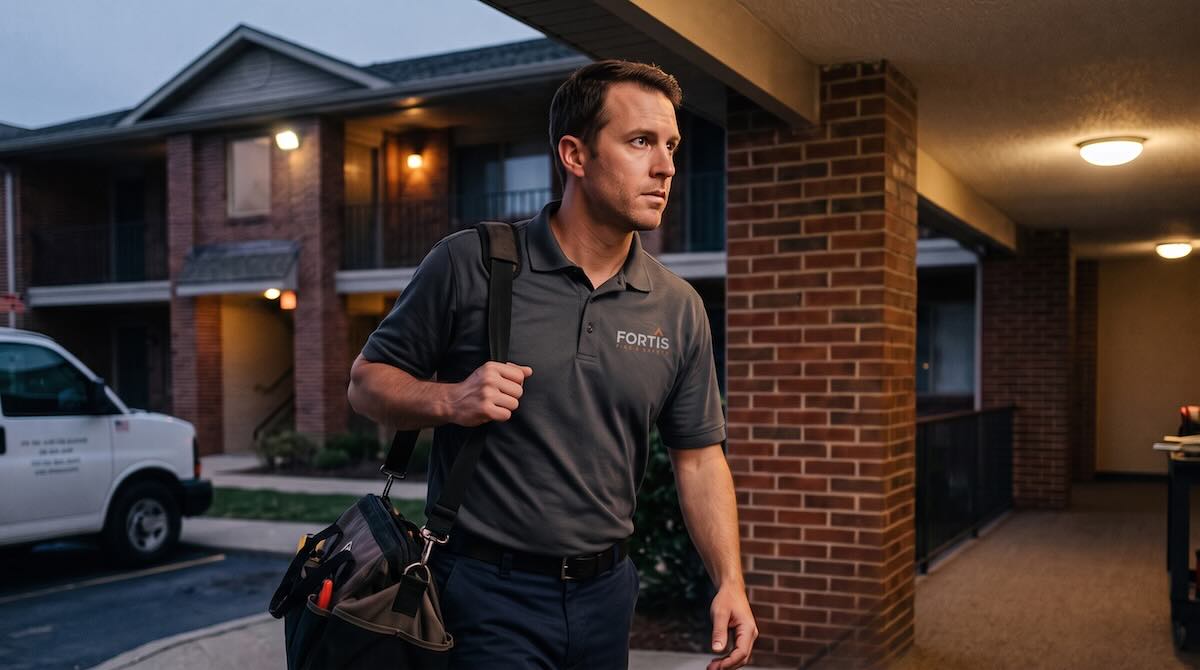
Man in a Fortis shirt carrying a tool bag walking outside a brick apartment building at dusk.

FREQUENTLY ASKED QUESTIONS

FAQs about fire protection services for multi-family resiodential buildings
We get asked a lot of questions about our Fire Protection Services for Apartments and Condominiums — here are some of the most common.
Are fire sprinkler systems required in apartment buildings?
Sprinkler requirements for multi-family residential buildings vary by building height, construction type, occupancy, and local jurisdiction. NFPA 101 requires sprinklers in new high-rise residential buildings and in certain other residential occupancy configurations. Many states and municipalities have adopted sprinkler requirements for new residential construction below the high-rise threshold. Retrofit requirements for existing buildings vary significantly by jurisdiction. Fortis provides code consultation services that clarify the specific sprinkler requirements applicable to your property — contact your local Fortis office for a jurisdiction-specific assessment.
How should fire alarm testing be managed in an occupied residential building?
Occupied residential buildings require advance resident notification before alarm testing — typically 24 to 72 hours depending on local requirements and property management standards. Testing should be scheduled during daytime hours when residents are most likely to be aware of the planned test. Fortis coordinates all alarm testing with property management, provides resident notification templates, and schedules testing in zones where possible to minimize the duration of building-wide alarm activation. All testing is conducted in compliance with NFPA 72 requirements.
What security features should a multi-family residential community have?
A well-secured multi-family community typically includes controlled access at all exterior entry points with electronic credential or video intercom systems; high-definition surveillance covering parking areas, common amenities, package rooms, and building entrances; adequate lighting throughout the property; and 24/7 monitoring for after-hours security coverage. The appropriate security level depends on the community's size, urban density, resident demographics, and existing risk profile. Fortis conducts security assessments that evaluate specific vulnerabilities and recommend solutions proportionate to the actual risk — not one-size-fits-all packages.
Who is responsible for fire alarm maintenance in a condo building — the HOA or individual unit owners?
Responsibility for fire alarm maintenance in condominium buildings is typically divided between the HOA and unit owners based on the association's governing documents and applicable state law. Building-wide and common area systems — including the main fire alarm control panel, common area devices, and monitored communication pathways — are generally the HOA's responsibility. In-unit smoke and CO detectors may be the unit owner's responsibility depending on the governing documents. Fortis works with HOA management to clarify responsibility boundaries and design service programs that address building-wide obligations comprehensively.
What is the most common fire and life safety emergency in a residential building?
Accidental sprinkler head activation — caused by physical damage from maintenance activity, renovation work, or resident impact — is one of the most common fire and life safety emergency calls in residential buildings. A single activated head can discharge hundreds of gallons of water before the system is isolated, causing significant water damage to the activated unit and units below. Fortis provides 24/7 emergency response for sprinkler head damage, with technicians equipped to isolate the system, replace the damaged head, and restore full protection in a single visit.

WHY CHOOSE FORTIS for multi-family residential buildings

The Fortis Difference
Fortis brings residential-specific expertise, resident-aware service programs, and the complete community protection that property managers, asset owners, and HOA boards need from a provider who understands that every compliance obligation represents a person who calls that building home.Fortis brings regulatory expertise, network-wide consistency, and the critical asset protection that financial institutions require from a fire and life safety provider accountable to the same documentation standards that govern the institutions themselves.

From high-rise apartments to sprawling condo complexes, Fortis delivers the trust you need to keep your community safe.
Residential expertise.

Fortis understands the specific demands of multi-family environments — the resident impact considerations, the HOA governance requirements, and the compliance obligations that distinguish residential fire and life safety from commercial service.

Resident-aware service.

Inspections and maintenance scheduled with resident impact as a primary consideration — advance notice, daytime scheduling, and coordination with property management on resident communication.

Complete community protection.

Fire alarms, sprinklers, suppression, and security — all from one provider, on coordinated schedules, with unified documentation. One relationship. Total coverage.

Multi-Family Residential Service Area

Fire protection coverage

Fortis Fire & Safety operates through a national network of regionally embedded fire and life safety companies — delivering multi-family residential expertise in every market we serve, backed by the resources and standards of a premier national organization


For national account inquiries, contact our National Accounts team.
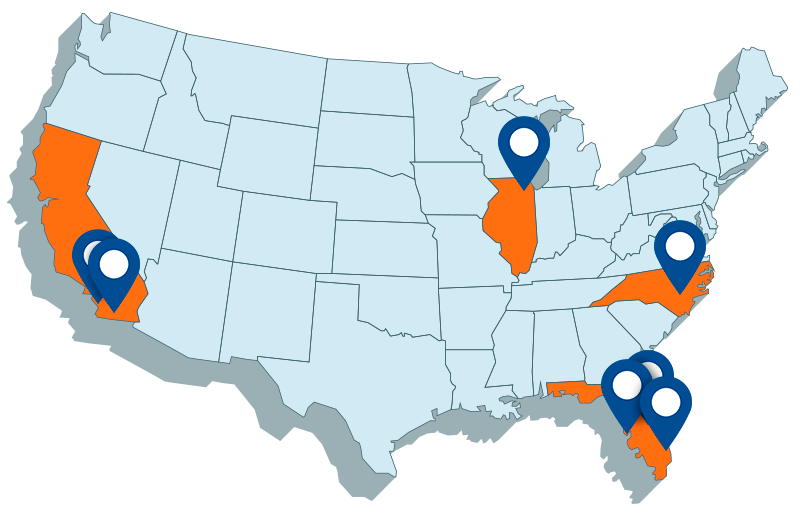
Map of the US highlighting California, Illinois, North Carolina, and Florida with blue location pins.

CJ Suppression

205 Lewis Court
Corona, CA 92882

visit site >

VFS Fire & Security Services

501 W. Southern Avenue
Orange, CA 92865

visit site >

LaMarco Systems

425 Huehl Rd Building 5
Northbrook, IL 60062

visit site >

Diversified Systems, Inc.

1103 Great Falls Court
Knightdale, NC 27545

visit site >

Integrated Fire & Security Systems

1970 Dana Drive
Fort Myers, FL  33907

visit site >

Lifesafety Management

2017 Corporate Drive
Boynton Beach, FL 33426

visit site >

Piper Fire Protection

13075 US Hwy 19 N
Clearwater, FL 33764

visit site >

PROTECT THE COMMUNITY. PROTECT THE HOME.

Talk to a Fortis specialist about fire and life safety for your residential property.

Fortis Family of Brands
Local expertise, national strength
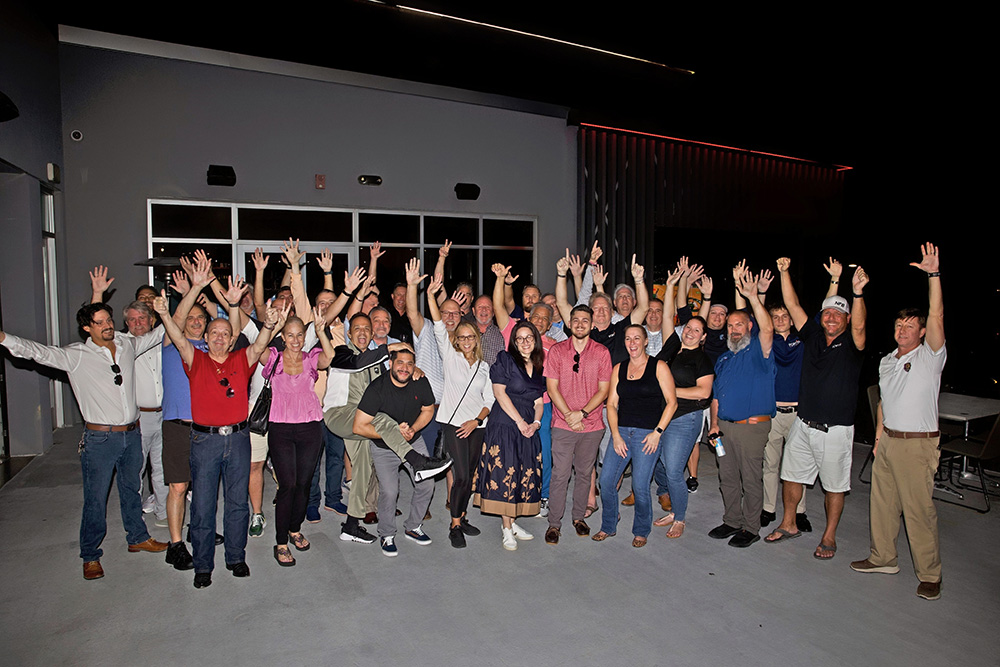
Large group of people outside at night with raised hands, smiling and posing for a photo.
The best of both — in every market we serve.

Trust is built locally. It lives in the technician who knows your building, knows your local codes, and shows up when something goes wrong at midnight. It lives in the relationship between a fire protection company and the community it has served for decades.


But capability is built at scale. The training standards, the technical resources, the purchasing power, the shared knowledge of a unified national organization — these are the things that make a local provider exceptional rather than merely adequate.

Fortis was built on this belief.

Our network of regionally rooted fire and life safety companies delivers genuine local expertise in every market we serve — technicians who know the regional AHJs, the local codes, and the specific demands of the facilities in their community. Behind each of them stands the full weight of a premier national organization.

You build. You create. You push the world forward.
We protect it all.
CJ Suppression logo with stylized flames above oval containing 'CJS' text, tagged as a Fortis brand.Diversified Systems, Inc. logo with a downward triangle and horizontal line, A Fortis brand.IFSS logo with Integrated Fire and Security Solutions, a Fortis brand text.LSM shield logo with text LifeSafety Management, a Fortis brand on black background.Piper Fire Protection logo with a stylized water droplet and swoosh, labeled a Fortis brand.VFS logo with a triangular symbol above and text Fire & Security Services, A Fortis BrandLAMARCO SYSTEMS logo with text Life Safety & Integrated Security Solutions, a FORTIS brand.