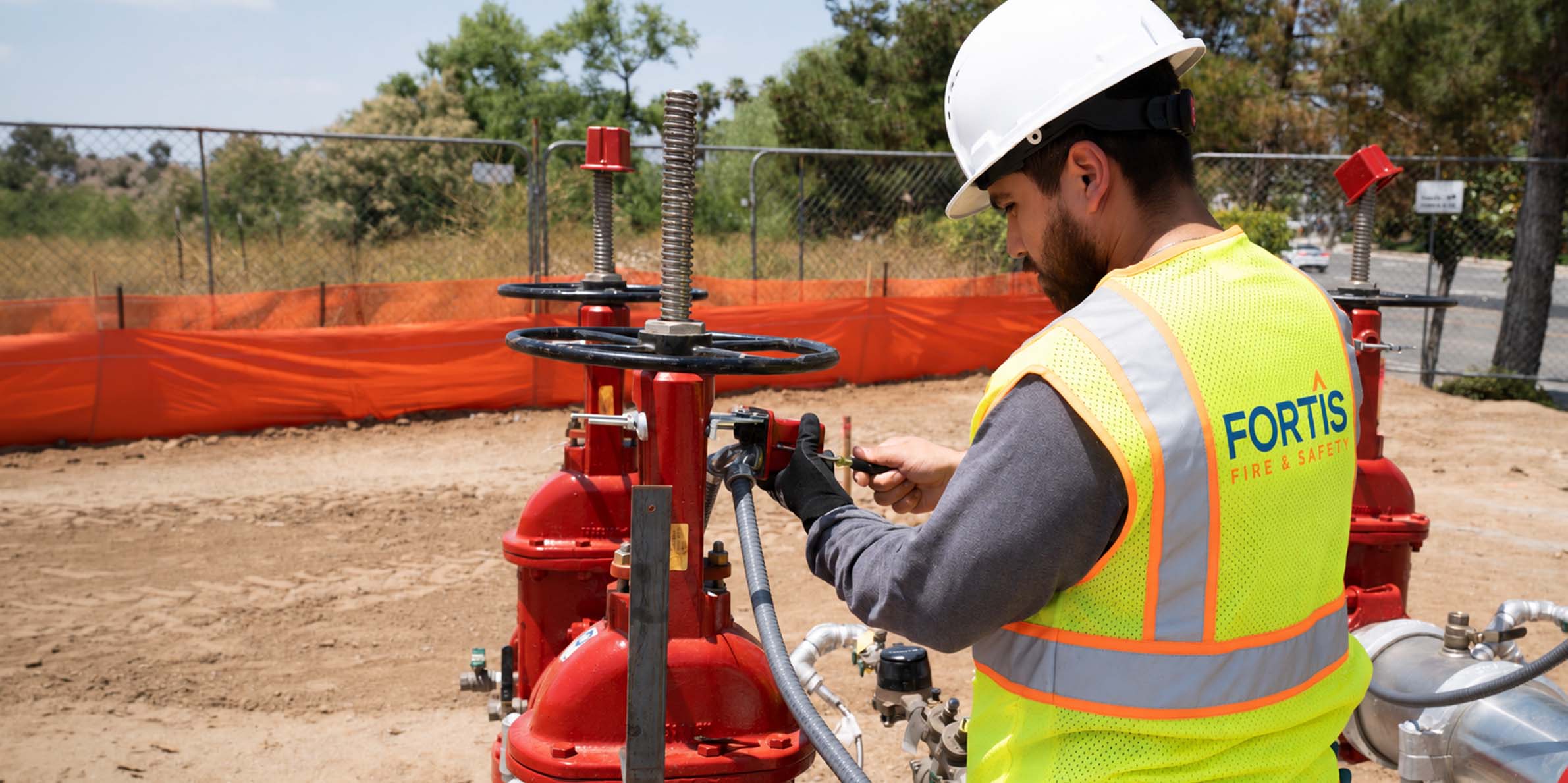
Worker in hard hat and vest adjusts large red fire safety valves at an outdoor construction site.

fire suppression systems
PROTECT WHAT WATER CANNOT
Fire Suppression Systems keep your vital operations invincible.
While water saves the shell of the building, dry suppression saves the soul of your operations. 
Downtime, zero. Legacy, protected.
CONTACT FORTIS
Some things are simply irreplaceable. You should feel the weight of that responsibility lift as you secure your most vital assets. No residue. No ruin. No lost data. Just pure, calculated protection that recognizes the value inside your walls. Shield the tech. Save the mission. Maintain the uptime. Your mission keeps moving and your records stay safe, even when the unthinkable happens. “Potential catastrophe” becomes “managed event.” Fortis delivers control when there is no room for error.
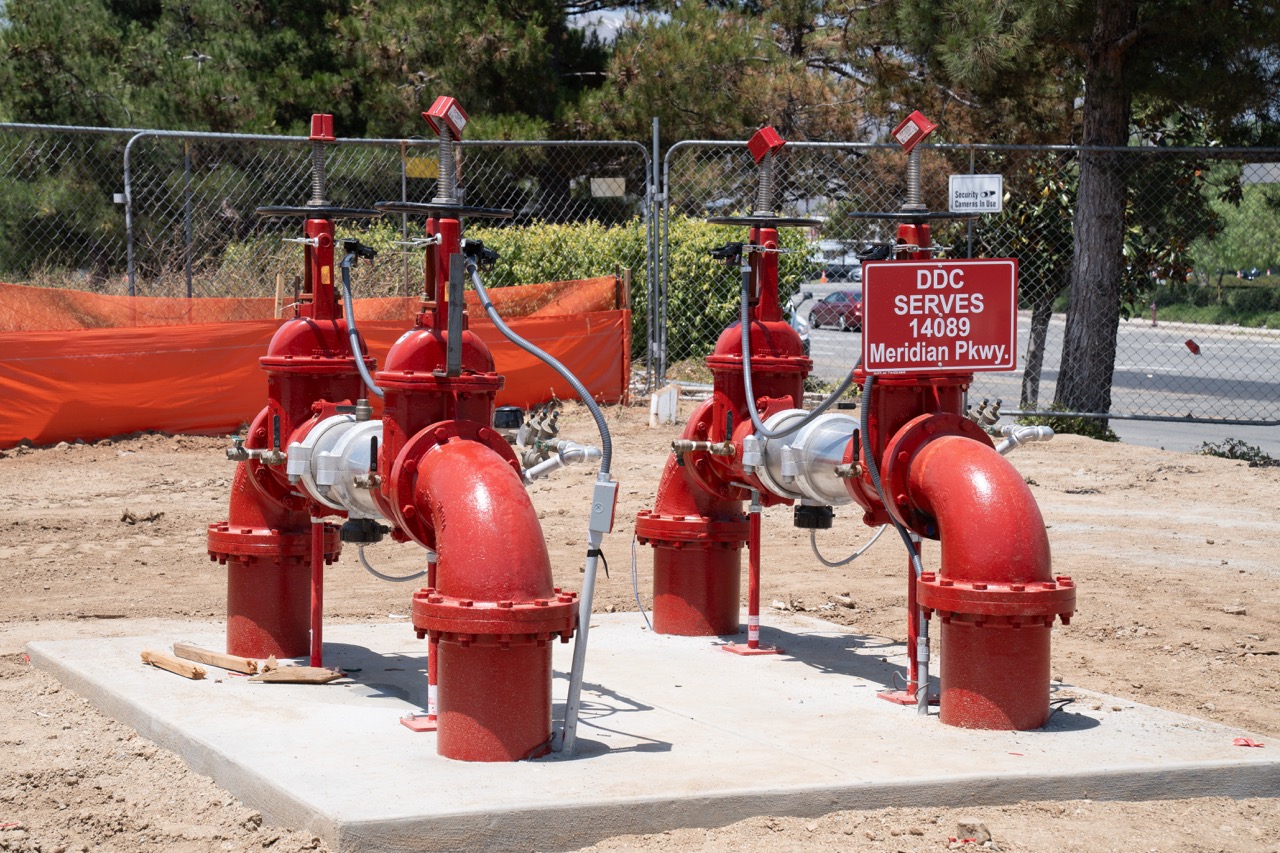
Four large red fire suppression valves installed on a concrete pad at a construction site.
What is a fire suppression system?

A fire suppression system is a fixed, automatic fire protection system that uses a suppression agent other than water — such as clean gas agents, CO2, or dry chemical — to extinguish or control fire in environments where water would cause as much damage as the fire itself.

Common in server rooms, data centers, commercial kitchens, industrial equipment areas, and archival spaces, suppression systems are engineered to respond instantly and precisely — eliminating the fire threat without leaving residue, damaging sensitive equipment, or disrupting the operations they protect.

Contact Fortis

Who needs fire suppression systems

Some things are simply irreplaceable.
Fire suppression systems are the critical protection layer for facilities where the contents — not just the structure — represent irreplaceable value. When water is not an option, suppression systems are the answer.

Data Centers

A server room fire suppressed with water is a data center destroyed twice. Clean agent systems — FM-200, Novec 1230 — extinguish fire in seconds, leaving no residue, no moisture, and no interrupted uptime. For environments where a single rack failure can trigger cascading operational consequences, suppression is not optional. It is existential protection.

Healthcare

Diagnostic imaging suites, surgical environments, and sterile storage areas require suppression systems that protect sensitive equipment without contaminating clinical spaces. CO2 and clean agent systems provide precise, residue-free protection in environments where both the equipment and the environment itself must remain uncompromised.

Financial Institutions

Irreplaceable records, currency storage, and sensitive infrastructure demand suppression systems engineered for controlled, clean extinguishment. A water activation in a records vault or currency processing room carries consequences far beyond the immediate fire event. Fortis designs suppression systems that protect the asset, not just the structure.

Hospitality

Commercial kitchens in hotels, resorts, and high-volume restaurants represent some of the highest fire risk environments in the hospitality sector. Wet chemical hood suppression systems are purpose-engineered for high-heat, grease-laden kitchen environments — activating automatically to suppress kitchen fires before they reach the structure.

Warehouse & Distribution Centers

Industrial equipment areas, battery charging stations, and conveyor drive systems within large facilities require targeted suppression coverage where water-based systems are impractical. Fortis designs suppression solutions for specific industrial hazards within larger facility footprints — layering protection where it matters most.

Education

Chemistry laboratories, server infrastructure, and archival library spaces on educational campuses present suppression challenges that standard sprinkler systems cannot address. Fortis provides clean agent and CO2 solutions for specialized campus environments where protection must be precise and residue-free.

Office Buildings

Server closets, IT infrastructure rooms, and records storage areas within office buildings are often overlooked in facility-wide sprinkler designs. Suppression systems for these targeted spaces protect the technology and records that keep the business running — without the water damage risk that would follow a sprinkler activation.

Multi-Family Residential

Mechanical rooms, electrical infrastructure, and package storage areas in residential communities benefit from targeted suppression coverage that protects shared infrastructure without risking water damage to occupied units.

FIRE suppression system CODE & COMPLIANCE
We Know the Rules. We Help You Follow Them.
Fire suppression systems are among the most heavily regulated life safety systems in any facility — and for good reason. The wrong agent in the wrong environment, or a missed inspection interval, can be as damaging as the fire the system was designed to prevent.
Suppression system compliance isn't governed by a single code — it depends on the suppression agent, the application, and the local Authority Having Jurisdiction. Fortis technicians are certified across every major suppression system type and trained in the regional code interpretations of every market we serve. Your documentation holds up under scrutiny because we know exactly what scrutiny looks like.
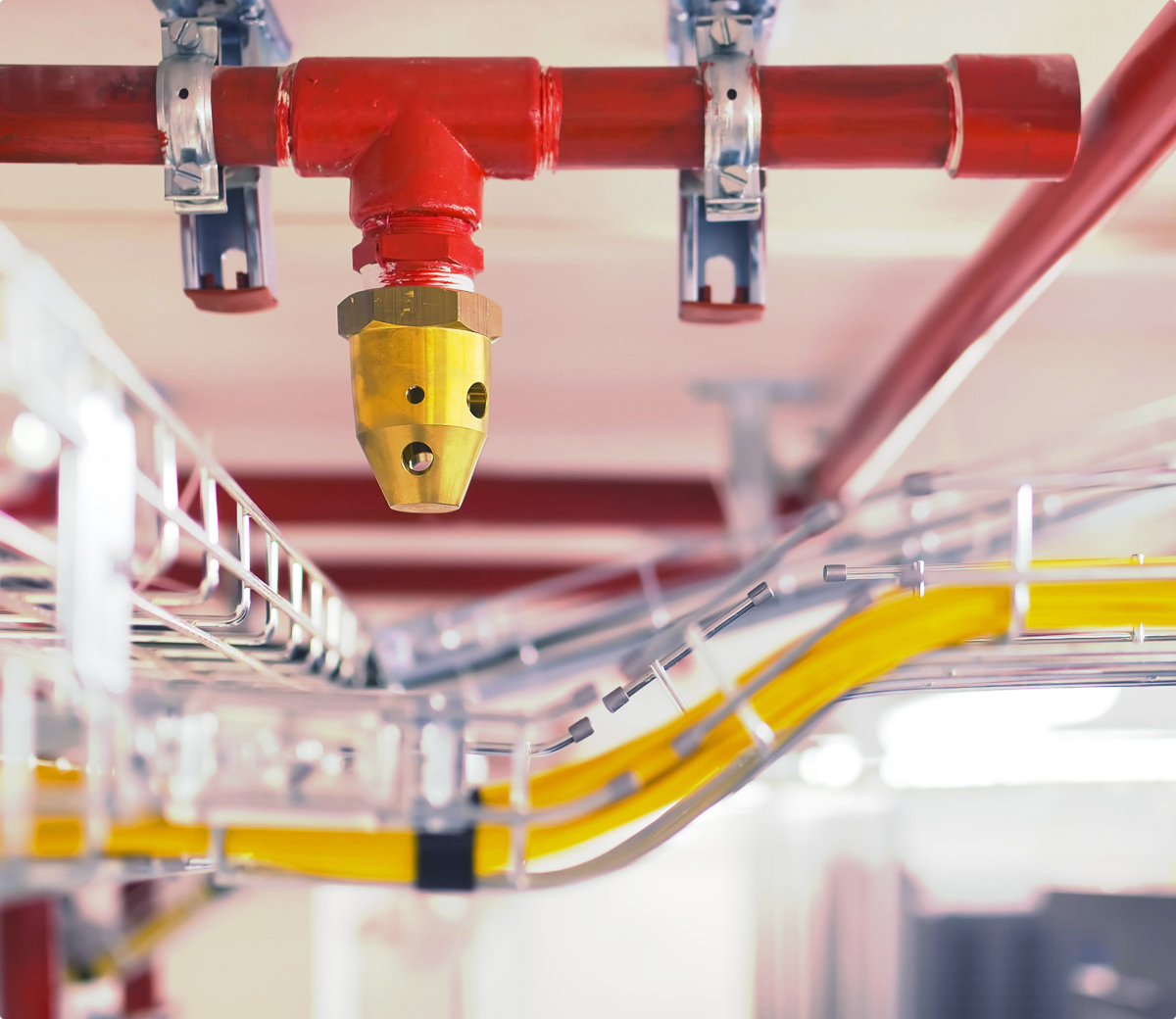
Close-up of a red fire sprinkler pipe with a brass sprinkler head attached to ceiling pipes.

NFPA 2001 — Clean Agent Systems

The governing standard for gaseous clean agent suppression systems, including FM-200 (HFC-227ea) and Novec 1230. NFPA 2001 establishes design, installation, and inspection requirements for systems used in data centers, server rooms, financial records environments, and other spaces where water-based suppression is not an option.

NFPA 96 — Commercial Kitchen Hood Systems

The Standard for Ventilation Control and Fire Protection of Commercial Cooking Operations — one of the most frequently cited codes in restaurant and hospitality fire inspections. NFPA 96 requires semi-annual inspection and maintenance of kitchen hood suppression systems at minimum, with fuel shutoff device testing, nozzle inspection, and agent supply verification all part of a compliant program.

NFPA 12 & NFPA 17 / 17A — CO2 and Chemical Systems

NFPA 12 governs carbon dioxide suppression systems used in industrial and equipment protection applications. NFPA 17 covers dry chemical systems; NFPA 17A governs wet chemical systems most commonly applied in commercial kitchen environments. Each standard carries its own inspection frequency, agent verification, and documentation requirements.
Local AHJ requirements add another layer on top of every national standard — and they vary.
Fortis manages that complexity so you don't have to navigate it alone.
Contact Fortis

how it works

Engineered for your facility. Built to perform.
Every Fortis service relationship follows the same standard: thorough assessment, precise execution, clear documentation, and a team that stays accountable long after the work is done.
1

Hazard Assessment & System Design

No suppression system should be selected before the hazard is fully understood. Fortis conducts detailed hazard assessments — evaluating the fire risk profile, the assets at risk, the environmental constraints, and the applicable code requirements — before recommending an agent or system configuration. FM-200, Novec 1230, CO2, wet chemical, and dry chemical systems each serve different environments. We match the solution to the reality.

Man and woman in gray shirts reviewing architectural blueprints on a table in an office.
2

Installation & Integration

Suppression systems must integrate with the facility's fire alarm and detection infrastructure to function correctly. Fortis manages full system integration — from agent storage and piping through detection devices, control panels, and abort switches — with coordination between suppression, alarm, and HVAC shutdown sequences where required.

Two workers in safety gear inspecting a red fire suppression system pipe in a modern office.
3

Inspection & Testing

Semi-annual inspection programs cover agent quantity verification, nozzle condition, actuation device testing, and full system functional tests per applicable NFPA standards. Every inspection is documented with clear, actionable reporting — not a checklist that requires a fire protection engineer to interpret.
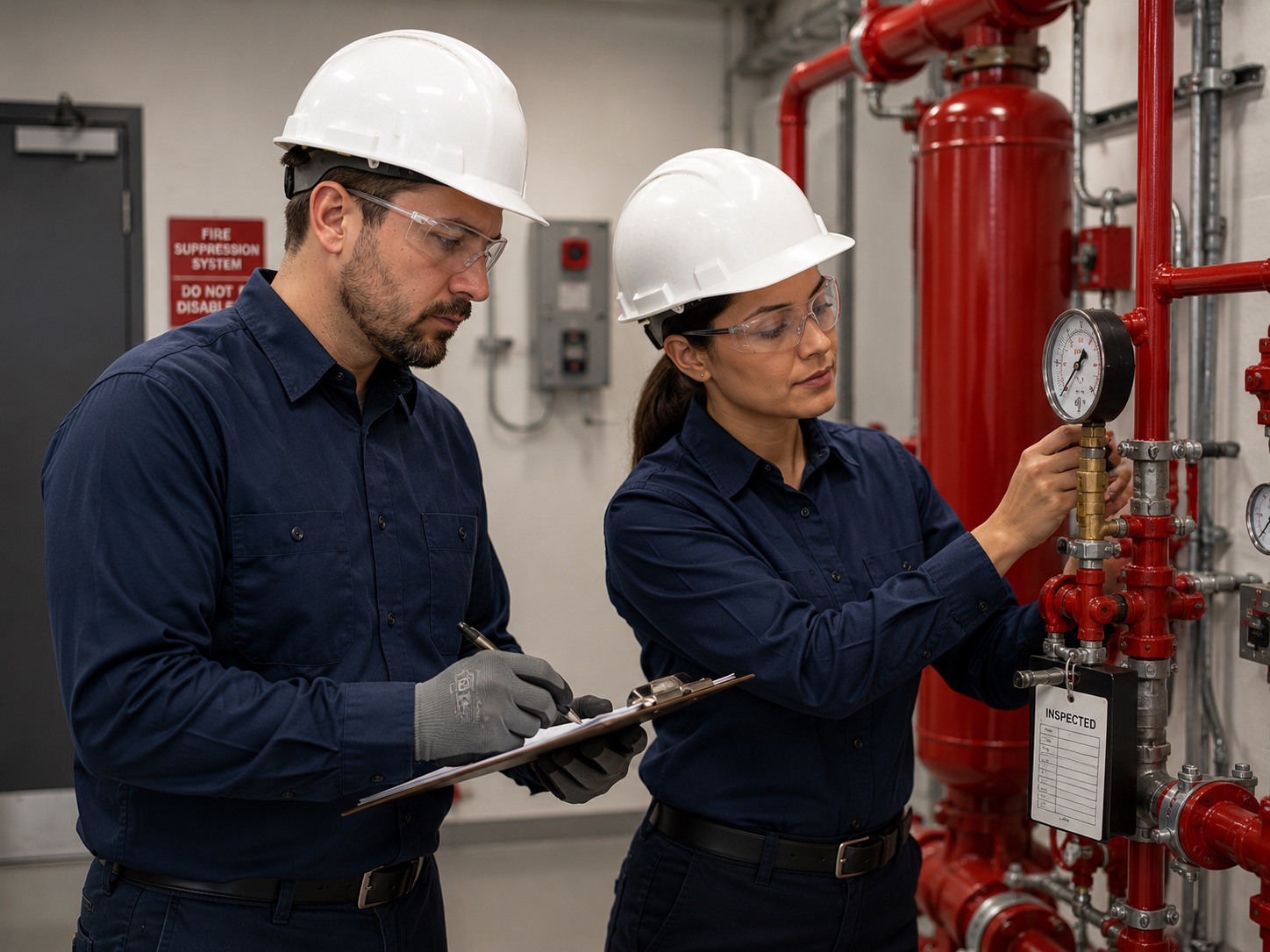
Two workers in hard hats inspecting and recording readings on a fire suppression system gauge.
4

Post-Activation Restoration

After a suppression system activates, restoring the space to operational status requires agent recharge, system recertification, and in some cases coordination with AHJ for re-occupancy. Fortis emergency response teams manage post-activation restoration end-to-end.
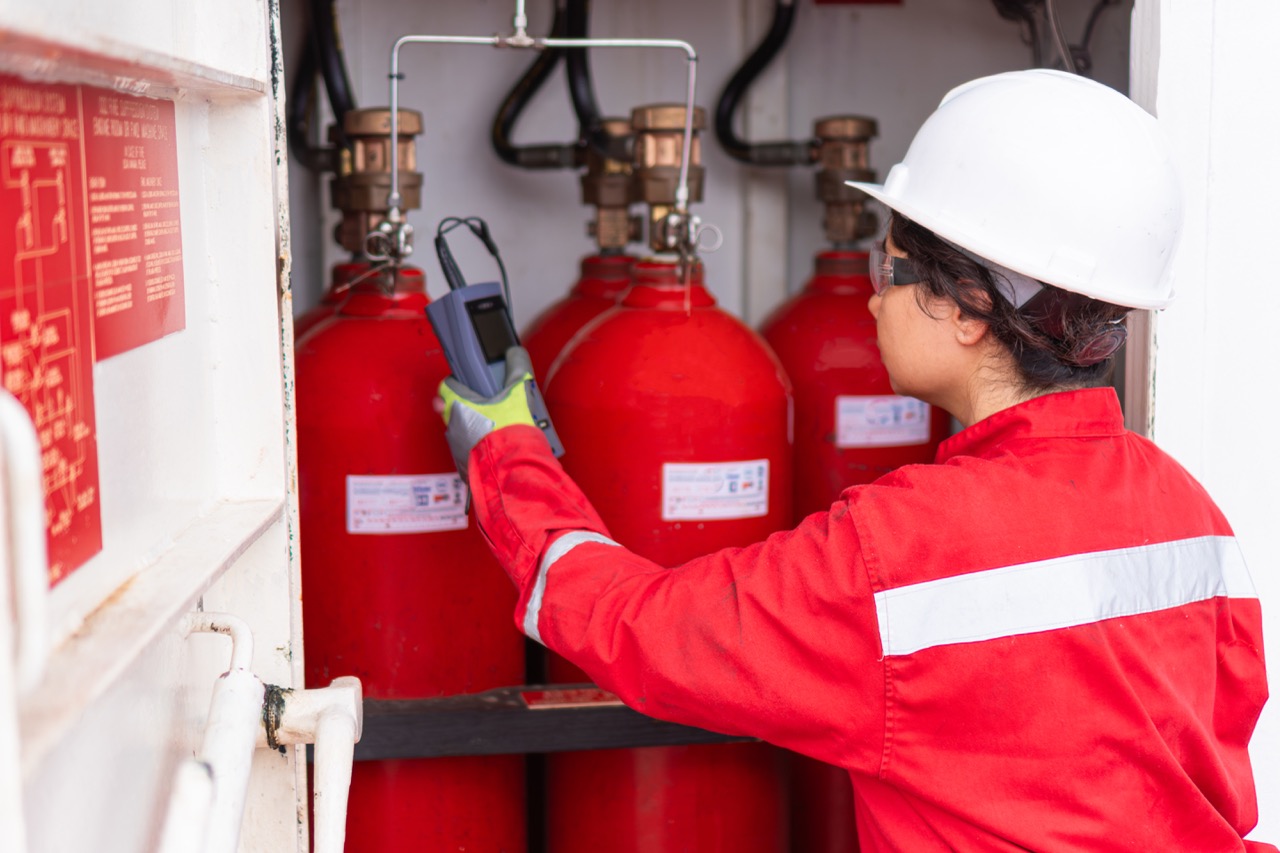
Worker in red uniform and white helmet inspects fire suppression system cylinders with a device.

FREQUENTLY ASKED QUESTIONS

FAQs about fire suppression systems
We get asked a lot of questions about our Fire Suppression Systems — here are some of the most common.
What is a clean agent fire suppression system?
A clean agent system uses a gaseous suppression agent — such as FM-200 (HFC-227ea) or Novec 1230 — to extinguish fire by interrupting the chemical reaction of combustion or absorbing heat, without leaving any residue. Clean agent systems are electrically non-conductive, safe for occupied spaces when designed within NOAEL concentration limits, and designed to discharge and clear within minutes of activation — allowing rapid return to operations.
Is a clean agent suppression system safe for people in the room?
Yes, when properly designed. FM-200 and Novec 1230 systems are engineered to discharge at concentrations that are effective against fire but remain below the No Observed Adverse Effect Level (NOAEL) for human exposure. Systems are also equipped with pre-discharge alarms and abort switches to provide occupants time to evacuate before discharge. Fortis designs all clean agent systems with occupant safety as a primary parameter.
How often does a fire suppression system need to be inspected?
Most suppression systems require semi-annual inspection under applicable NFPA standards, with annual and six-year extended maintenance intervals for specific components. Commercial kitchen hood systems under NFPA 96 require inspection every six months at minimum — and more frequently in high-volume cooking operations. Fortis manages the full inspection schedule so compliance intervals are never missed.
What is the difference between a fire sprinkler system and a fire suppression system?
A fire sprinkler system uses water, delivered automatically through heat-activated sprinkler heads, to suppress fire. A fire suppression system uses a non-water agent — gas, chemical, or foam — to extinguish fire in environments where water would damage the protected assets or is otherwise impractical. Many facilities require both: sprinklers for general building protection and suppression systems for targeted high-value or high-risk areas.
What happens after a suppression system discharges?
After discharge, the protected space must be ventilated, the suppression agent must be recharged, all system components must be inspected and recertified, and the space may require AHJ clearance before re-occupancy. Fortis emergency response teams handle post-activation restoration from initial assessment through final system certification — minimizing the time between activation and full return to operation.
Do kitchen hood suppression systems require separate inspections from the building's fire sprinkler system?
Yes. Kitchen hood suppression systems operate under NFPA 96 and require their own semi-annual inspection and maintenance program, independent of the building's sprinkler inspection schedule. The hood system, nozzles, agent supply, and fuel shutoff devices must all be inspected and tested. Fortis coordinates kitchen suppression inspections alongside broader facility fire protection programs for maximum efficiency.

WHY CHOOSE FORTIS for fire suppression systems

The Fortis Difference
Suppression systems protect the assets that represent the soul of an operation — the data, the records, the equipment, the infrastructure that cannot be replaced with an insurance check. The provider who designs and maintains those systems carries a responsibility that goes well beyond compliance.Fire sprinkler work is technical at its core. Hydraulics, code interpretation, system design, and inspection discipline — all of it requires expertise that can only be built through years of field experience. The difference between a compliant, reliable sprinkler system and one that fails when it's needed most often comes down to the quality of the provider who designed and maintains it.

Fortis operates through a national network of regionally rooted fire and life safety companies — meaning the technicians who service your suppression systems are local, code-current, and accountable to the community they serve.Our national network of regionally rooted fire and life safety companies means the technician who designs, installs, and maintains your system is local — with the training, standards, and resources of a unified national organization behind every visit.

Fortis delivers control when there is no room for error.
Clean agent expertise.

FM-200, Novec 1230, and CO2 systems designed and maintained by technicians who understand the physics of suppression — not just the mechanics of installation.

Readiness without disruption.

Inspection and service programs that keep your system compliant and functional without interrupting the operations it protects. Precision scheduling, clear communication, zero surprises.

Specialized integration.

Suppression systems that work in concert with your alarm, detection, and HVAC infrastructure — not as isolated components, but as part of a coordinated life safety strategy.

Service Area

fire Suppression service coverage

Fortis Fire & Safety operates through a national network of regionally embedded fire and life safety companies — delivering specialized suppression expertise wherever your facilities operate, backed by the resources of a premier national organization.

For national account inquiries, contact our National Accounts team.
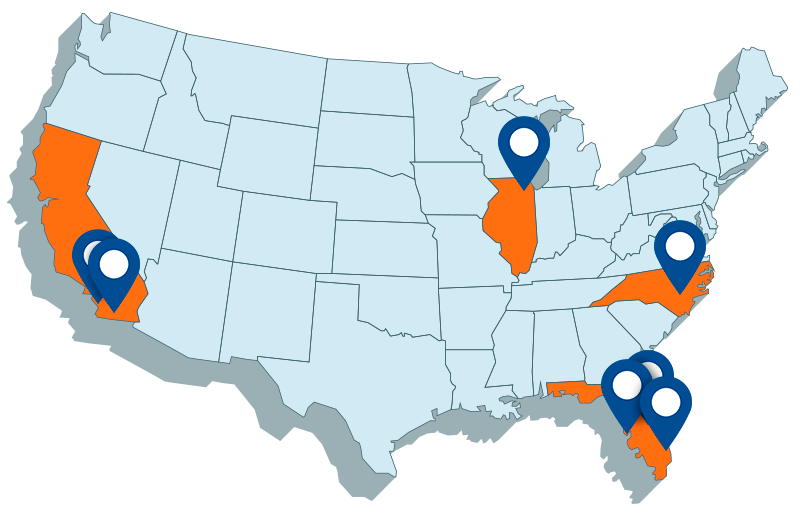
Map of the US highlighting California, Illinois, North Carolina, and Florida with blue location pins.

CJ Suppression

205 Lewis Court
Corona, CA 92882

visit site >

VFS Fire & Security Services

501 W. Southern Avenue
Orange, CA 92865

visit site >

LaMarco Systems

425 Huehl Rd Building 5
Northbrook, IL 60062

visit site >

Diversified Systems, Inc.

1103 Great Falls Court
Knightdale, NC 27545

visit site >

Integrated Fire & Security Systems

1970 Dana Drive
Fort Myers, FL  33907

visit site >

Lifesafety Management

2017 Corporate Drive
Boynton Beach, FL 33426

visit site >

Piper Fire Protection

13075 US Hwy 19 N
Clearwater, FL 33764

visit site >

SECURE YOUR CRITICAL ASSETS.

Talk to a Fortis fire suppression specialist about your facility.

Fortis Family of Brands
Local expertise, national strength
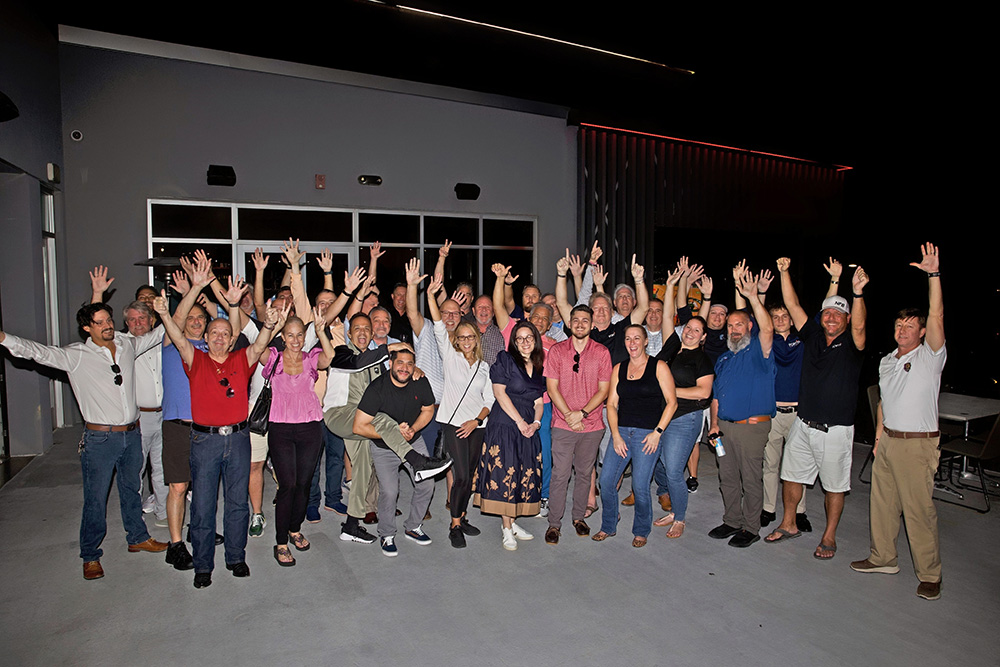
Large group of people outside at night with raised hands, smiling and posing for a photo.
The best of both — in every market we serve.

Trust is built locally. It lives in the technician who knows your building, knows your local codes, and shows up when something goes wrong at midnight. It lives in the relationship between a fire protection company and the community it has served for decades.


But capability is built at scale. The training standards, the technical resources, the purchasing power, the shared knowledge of a unified national organization — these are the things that make a local provider exceptional rather than merely adequate.

Fortis was built on this belief.

Our network of regionally rooted fire and life safety companies delivers genuine local expertise in every market we serve — technicians who know the regional AHJs, the local codes, and the specific demands of the facilities in their community. Behind each of them stands the full weight of a premier national organization.

You build. You create. You push the world forward.
We protect it all.
CJ Suppression logo with stylized flames above oval containing 'CJS' text, tagged as a Fortis brand.Diversified Systems, Inc. logo with a downward triangle and horizontal line, A Fortis brand.IFSS logo with Integrated Fire and Security Solutions, a Fortis brand text.LSM shield logo with text LifeSafety Management, a Fortis brand on black background.Piper Fire Protection logo with a stylized water droplet and swoosh, labeled a Fortis brand.VFS logo with a triangular symbol above and text Fire & Security Services, A Fortis BrandLAMARCO SYSTEMS logo with text Life Safety & Integrated Security Solutions, a FORTIS brand.