
Worker in safety vest and hat walking inside a large empty warehouse holding a clipboard and device.

fire sprinkler systems


YOUR BUILDING'S LAST LINE OF DEFENSE
Fire Sprinkler Systems are the last line of defense for your facility.
When the heat rises, the response must be absolute. You shouldn't have to wonder if the system will fire; you should know it will.
Contain the threat. Save the structure. Protect your people.
CONTACT FORTIS
Experience the profound confidence that comes from a building that can defend itself. No second-guessing. No delay. No compromises. When your facility becomes self-defending, you sleep better knowing your investment is guarded by a silent, reliable, and unfailing force. Total readiness. Zero hesitation. Constant watch. Freedom to operate without the constant shadow of "what-if." Compliance becomes a baseline, not a burden. Fortis ensures that when the water flows, it hits the mark.
Close-up of a red fire sprinkler head mounted on a ceiling pipe.
What is a fire sprinkler system?

A fire sprinkler system is a network of water-filled pipes and heat-activated sprinkler heads installed throughout a facility to automatically detect and suppress fire at its source. Individually triggered by heat — not smoke — each sprinkler head activates only where the fire is, delivering immediate water flow to contain the threat before it spreads.

For facility and property managers, a properly designed, inspected, and maintained fire sprinkler system is the most proven form of active fire protection available — suppressing or controlling the vast majority of fires with the heads closest to the source.

Contact Fortis

Who needs fire sprinkler systems

The Facilities Where Performance Is Non-Negotiable — and the Stakes of Failure Are Highest.
Code compliance is the minimum. A sprinkler system that performs when it's needed — engineered for the specific reality of your facility, inspected on schedule, and maintained by a provider who stays accountable — is the standard every occupied facility deserves and too few actually have.

Warehouse & Distribution Centers

High-cube racking, dense commodity storage, and constant movement create fire risk at a scale that demands precision sprinkler design. ESFR (Early Suppression, Fast Response) and in-rack systems must be engineered for actual storage configurations — not approximated. Fortis designs for your density, your ceiling height, and your operation.

Healthcare

Hospitals, surgery centers, and long-term care facilities operate under some of the most stringent sprinkler requirements in any sector. Defend-in-place protocols, vulnerable patient populations, and the complexity of multi-wing facilities demand sprinkler systems that perform without hesitation — and inspections that document exactly that.

Hospitality

Hotels and resorts carry the compounded responsibility of protecting guests who are unfamiliar with the building, often asleep, and entirely dependent on systems they'll never think about. Sprinkler coverage across sprawling footprints — guest rooms, kitchens, ballrooms, corridors — must be comprehensive and continuously verified.

Multi-Family Residential

Apartment communities and residential complexes protect people in their most private and vulnerable moments. A sprinkler system failure here is not an operational problem — it is a direct threat to residents who have no other line of defense. Fortis treats residential sprinkler work with the urgency that reflects that reality.

Data Centers

Water-based suppression in data center environments requires surgical design — protecting the structural shell without threatening the equipment within. Pre-action systems that require dual confirmation before water flows are standard in these environments, where an accidental discharge can be as catastrophic as the fire it prevents.

Education

From chemistry labs to dormitories to auditoriums, educational campuses present diverse occupancy types under a single responsibility umbrella. Fortis understands the complexity of campus-wide sprinkler infrastructure and the scheduling demands of maintaining it without disrupting the academic calendar.

Office Buildings

Tenants expect a safe environment as a non-negotiable baseline. Property managers need sprinkler systems that are code-compliant, reliably maintained, and documented with reporting clear enough to satisfy insurance carriers, inspectors, and ownership — without requiring a fire protection degree to interpret.

Financial Institutions

Banks and financial operations facilities house sensitive records, irreplaceable infrastructure, and staff who depend on building systems to perform without question. Sprinkler system reliability here is about more than safety — it is about protecting the continuity of trust.

FIRE sprinkler system CODE & COMPLIANCE
The Standard Is a Floor. We Work Above It.
Fire sprinkler systems in commercial and multi-family facilities operate under one of the most detailed compliance frameworks in the life safety industry. Design standards, inspection intervals, documentation requirements, and deficiency remediation timelines are all governed by code — and all carry real liability implications when they aren't met.
Understanding which standards apply to your facility, and what compliance actually looks like in practice, is the difference between a system that protects you and one that exposes you. Fortis manages that distinction as a standard part of every service relationship.
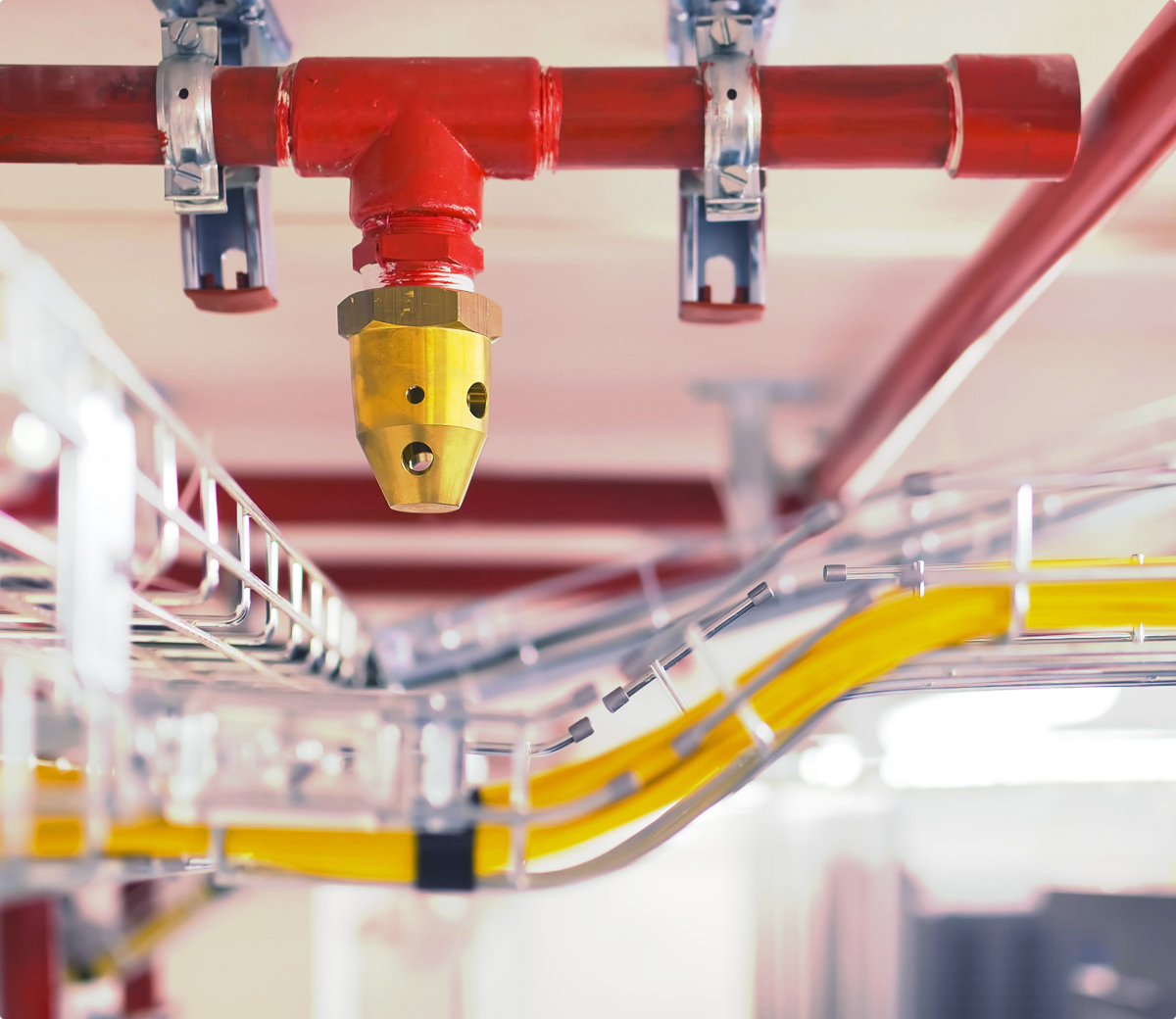
Close-up of a red fire sprinkler pipe with a brass sprinkler head attached to ceiling pipes.

NFPA 13 — Installation Standard

The Standard for the Installation of Sprinkler Systems governs the design and installation of fire sprinkler systems in commercial and multi-family occupancies — covering hydraulic calculations, head placement, pipe sizing, and system configuration. Every Fortis sprinkler installation is engineered to NFPA 13 requirements for the specific occupancy type, storage configuration, and ceiling height of your facility.

NFPA 25 — Inspection, Testing & Maintenance

The governing standard for ongoing sprinkler system compliance. NFPA 25 mandates inspection at multiple intervals — weekly and monthly valve checks, quarterly alarm device and water flow inspections, annual full system inspections, and five-year internal pipe obstruction investigations. All findings must be documented and deficiencies addressed within defined timeframes. A failed inspection is not a paperwork problem — it is a compliance event with real liability implications.

Local AHJ requirements

Regional codes layer on top of NFPA standards and vary significantly across every market Fortis serves. Local interpretation of NFPA 13 design requirements, AHJ-specific documentation standards, and jurisdiction-specific inspection frequency obligations all affect what compliance looks like in practice. Fortis technicians are trained in regional code requirements across every market we serve — so inspections hold up under local scrutiny, not just national minimums.
Compliance is not a destination. It is a continuous obligation — and Fortis manages it on your behalf, from first installation through every inspection that follows.
Contact Fortis

how it works

Engineered for your facility. Built to perform.
Every Fortis service relationship follows the same standard: thorough assessment, precise execution, clear documentation, and a team that stays accountable long after the work is done.
1

Design & Engineering

No two facilities share the same fire risk profile. Fortis engineers conduct hydraulic calculations, storage density analysis, ceiling height assessment, and occupancy evaluation before a single head is specified. The result is a system designed for your specific reality — not a template laid over your floor plan.

Two professionals in white shirts reviewing architectural blueprints on a table in an office.
2

Installation

Fortis installation teams work with your operational schedule to minimize disruption. Every installation is coordinated with local AHJ requirements and documented for permit and certificate of occupancy compliance.

Worker in hard hat and safety vest installing or inspecting a fire sprinkler on a ceiling pipe.
3

Inspection & Testing

NFPA 25-compliant inspection programs include flow tests, pressure checks, valve inspections, and obstruction investigations — all performed on schedule, all documented in clear, jargon-free reports you can actually use. No guesswork about your system status.

Man wearing cap and glasses inspecting red fire sprinkler system with clipboard in a utility room.
4

Maintenance & Repair

Deficiencies found during inspection don't sit in a report — they get resolved. Fortis provides same-provider repair, which means the technician who found the problem understands the system well enough to fix it correctly the first time.

Worker in safety vest and helmet adjusting a fire sprinkler system valve with a wrench in an industrial setting.

FREQUENTLY ASKED QUESTIONS

FAQs about fire sprinkler systems
We get asked a lot of questions about our Fire Sprinkler Systems — here are some of the most common.
How often does a fire sprinkler system need to be inspected?
NFPA 25 requires inspection at multiple intervals: weekly or monthly checks on control valves and gauges, quarterly inspections of alarm devices and water flow, annual full system inspections, and five-year internal pipe obstruction investigations. Your specific schedule depends on your system type and local AHJ requirements. Fortis manages the full inspection calendar so nothing falls through the cracks.
Do all sprinkler heads activate at once when a fire is detected?
No — this is one of the most common misconceptions about sprinkler systems. In a standard wet pipe system, only the individual sprinkler heads directly exposed to heat above a set threshold will activate. This means a localized fire triggers a localized response, limiting water damage to the area of the fire rather than the entire facility.
What is the difference between a wet pipe and a dry pipe sprinkler system?
A wet pipe system keeps pipes filled with pressurized water at all times — the most common and reliable configuration for most facilities. A dry pipe system fills pipes with pressurized air or nitrogen instead of water, with water held back by a valve until a sprinkler activates. Dry pipe systems are used in environments subject to freezing, such as unheated warehouses or parking structures, where water-filled pipes would create a freeze risk.
What happens if a sprinkler head is accidentally triggered?
Accidental activation — while uncommon in properly maintained systems — requires immediate response. The affected area must be evacuated, the water supply isolated, and the discharged head replaced before the system is restored to service. Fortis emergency response teams handle accidental activations and restore your system to full compliance as quickly as possible.
How do I know if my sprinkler system is up to code?
A current NFPA 25 inspection performed by a qualified fire protection contractor is the definitive answer. If your last inspection is overdue, has open deficiencies, or was performed by a provider whose documentation you cannot verify, it is time for a Fortis assessment.
Can a sprinkler system be modified when a facility is renovated?
Yes — and it must be. Any renovation that changes a facility's occupancy, storage configuration, ceiling height, or floor plan requires a sprinkler system review and likely a hydraulic redesign for the affected areas. Fortis manages renovation-driven system modifications from engineering through AHJ resubmission.

WHY CHOOSE FORTIS for fire sprinkler systems

The Fortis Difference
Fire sprinkler work is technical at its core. Hydraulics, code interpretation, system design, and inspection discipline — all of it requires expertise that can only be built through years of field experience. The difference between a compliant, reliable sprinkler system and one that fails when it's needed most often comes down to the quality of the provider who designed and maintains it.

Our national network of regionally rooted fire and life safety companies means the technician who designs, installs, and maintains your system is local — with the training, standards, and resources of a unified national organization behind every visit.

Fortis ensures that when the water flows, it hits the mark.
Precision engineering for high-stakes environments.

Fortis doesn't template. We evaluate storage density, ceiling heights, occupancy type, and future expansion before a system is designed. Every hydraulic calculation is built for your specific reality.

Trusted performance beyond the code minimum.

Flow tests, pressure checks, and valve inspections that go further than NFPA 25 requires — because the standard is a floor, not a ceiling. You should know your system works, not hope it does.

Custom architecture. Zero generic layouts.

No off-the-shelf designs. Every system Fortis installs is engineered for the facility it protects, with documentation that reflects that specificity.

Service Area

fire SPrinkler service coverage

Fortis Fire & Safety operates through a national network of regionally embedded Fire and Life Safety Companies — delivering local expertise in every market we serve, backed by the resources and standards of a premier national organization.

For national account inquiries, contact our National Accounts team.
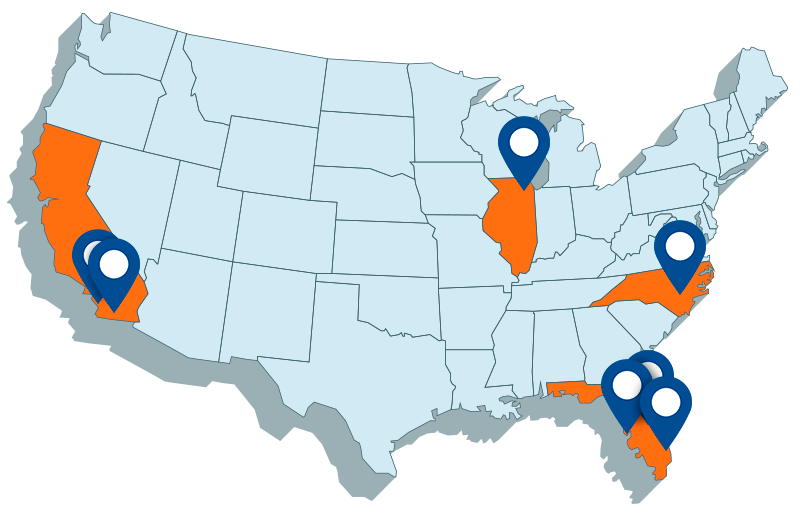
Map of the US highlighting California, Illinois, North Carolina, and Florida with blue location pins.

CJ Suppression

205 Lewis Court
Corona, CA 92882

visit site >

VFS Fire & Security Services

501 W. Southern Avenue
Orange, CA 92865

visit site >

LaMarco Systems

425 Huehl Rd Building 5
Northbrook, IL 60062

visit site >

Diversified Systems, Inc.

1103 Great Falls Court
Knightdale, NC 27545

visit site >

Integrated Fire & Security Systems

1970 Dana Drive
Fort Myers, FL  33907

visit site >

Lifesafety Management

2017 Corporate Drive
Boynton Beach, FL 33426

visit site >

Piper Fire Protection

13075 US Hwy 19 N
Clearwater, FL 33764

visit site >

DEFEND WITH ABSOLUTE CONFIDENCE.

Talk to a Fortis fire sprinkler specialist about your facility.

Fortis Family of Brands

Local expertise, national strength
Large group of people outside at night with raised hands, smiling and posing for a photo.
The best of both — in every market we serve.

Trust is built locally. It lives in the technician who knows your building, knows your local codes, and shows up when something goes wrong at midnight. It lives in the relationship between a fire protection company and the community it has served for decades.


But capability is built at scale. The training standards, the technical resources, the purchasing power, the shared knowledge of a unified national organization — these are the things that make a local provider exceptional rather than merely adequate.

Fortis was built on this belief.

Our network of regionally rooted fire and life safety companies delivers genuine local expertise in every market we serve — technicians who know the regional AHJs, the local codes, and the specific demands of the facilities in their community. Behind each of them stands the full weight of a premier national organization.

You build. You create. You push the world forward.
We protect it all.

CJ Suppression logo with stylized flames above oval containing 'CJS' text, tagged as a Fortis brand.Diversified Systems, Inc. logo with a downward triangle and horizontal line, A Fortis brand.IFSS logo with Integrated Fire and Security Solutions, a Fortis brand text.LSM shield logo with text LifeSafety Management, a Fortis brand on black background.Piper Fire Protection logo with a stylized water droplet and swoosh, labeled a Fortis brand.VFS logo with a triangular symbol above and text Fire & Security Services, A Fortis BrandLAMARCO SYSTEMS logo with text Life Safety & Integrated Security Solutions, a FORTIS brand.