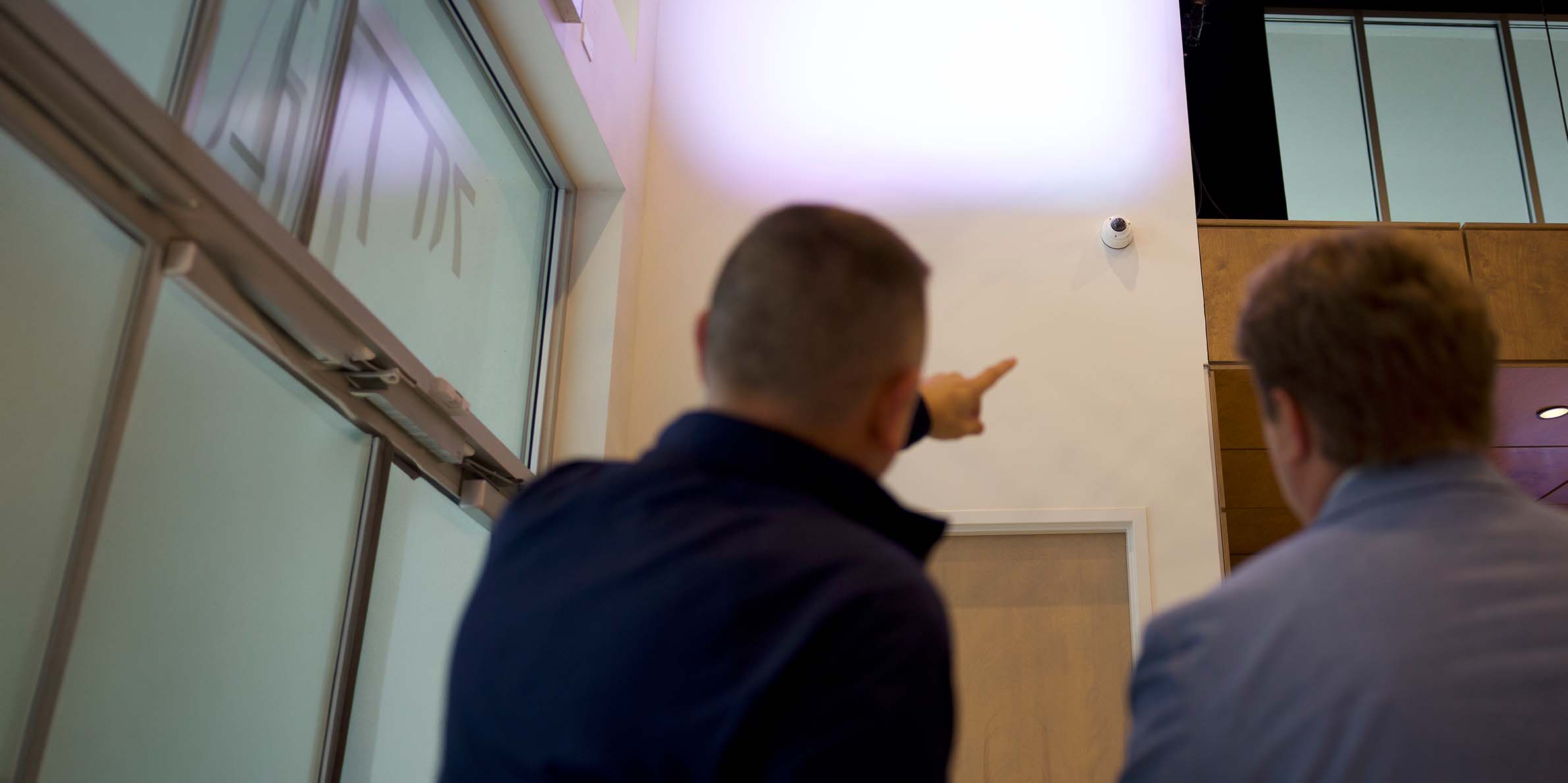
Two men indoors, one pointing towards a security camera mounted high on a wall.

security systems

Watch without worry.
Security Systems safeguard people, assets, and access points before risk escalates.
Total vigilance. Absolute composure. Fixed focus.
CONTACT FORTIS
Safety doesn’t stop at fire. Feel confident in your vigilance. No blind spots. No gaps. No surprises. Every entrance managed, every corridor covered, every threat identified. Watch the perimeter. Protect the staff.
Lock the risk. 24/7 visibility over your property, your assets, and your people. Replace vulnerability with strength. Service and inspection ensure systems remain functional, current, and trusted. No blind spots. No silent failures. Fortis keeps watch so you can focus on the future.

Person holding an ID badge to a wall-mounted card reader for access control.
What is a security system?

A commercial security system is an integrated network of access control, video surveillance, and monitoring technologies designed to protect a facility's people, assets, and perimeter from unauthorized access, theft, and safety threats.

Modern security systems go well beyond locks and cameras — they manage who enters your facility and when, provide high-definition documentation of all activity, deliver real-time alerts for security events, and integrate with fire and life safety infrastructure for a unified protection platform. For facility and property managers, a well-designed security system replaces vulnerability with visibility and converts reactive incident response into proactive risk management.

Contact Fortis

Who needs security systems

Integrated technology for a secure perimeter.
Security risk is universal — but it presents differently across facility types. The facilities where security system design, integration, and ongoing management are most consequential are those where people are most vulnerable, assets are most valuable, or access control is most complex.

Financial Institutions

Banks, credit unions, and financial operations facilities operate in environments where security is foundational to the business itself. Access control across teller areas, vault rooms, and back-office infrastructure; high-definition surveillance that meets regulatory documentation standards; and 24/7 monitoring that responds to events in real time — all integrated and managed by a provider who understands the compliance obligations of the financial sector.

Healthcare

Healthcare security encompasses infant protection, wander management for memory care residents, access control across clinical and administrative zones, and surveillance coverage that respects patient privacy while maintaining complete perimeter visibility. Fortis integrates security systems with fire and life safety infrastructure so that access control and alarm response work in concert during emergencies.

Multi-Family Residential

Residents trust that their building is safe the moment they walk through the door. Controlled access at all entry points, video surveillance of common areas and parking facilities, and package security management protect residents — and the reputation of the community they've chosen to call home.

Education

School and university security has evolved dramatically — campus protection now requires layered access control, visitor management, video surveillance, and emergency communication integration that enables rapid lockdown and coordinated response. Fortis designs educational security systems that protect without creating the institutional feel that undermines learning environments.

Office Buildings

Multi-tenant office environments require security systems that can segment access by tenant, floor, and time of day — providing each tenant with control over their own space while giving property management oversight of shared areas and building perimeter. Credential management, visitor access, and after-hours monitoring are coordinated through a single, manageable platform.

Warehouse & Distribution Centers

Large industrial facilities face security challenges at scale: expansive perimeters, multiple access points, high-value inventory, and round-the-clock operations that create both opportunity and risk. Fortis designs security systems for large facilities that cover every access point, every loading dock, and every interior zone — with monitoring that keeps pace with 24/7 operational reality.

Hospitality

Guest security is inseparable from the hospitality brand promise. Access control for guest room corridors, surveillance coverage of parking facilities and common areas, and back-of-house security for staff areas and supply rooms must be managed with a level of discretion that preserves the guest experience while maintaining complete facility visibility.

Data Centers

Physical security in data centers is a regulatory and contractual requirement, not an option. Multi-factor authentication at every access point, mantraps and interlocks for critical areas, 24/7 surveillance with full retention, and audit-ready documentation are standard requirements for facilities that house critical global infrastructure. Fortis designs data center security systems to meet the most demanding compliance frameworks.

security system CODE & COMPLIANCE

Security Compliance Isn't One Framework. It's Several — Simultaneously.
Commercial security systems operate under a more complex compliance environment than any other life safety system type — because the obligations come from multiple directions at once. Building codes, federal regulatory frameworks, state privacy laws, and industry-specific requirements all intersect in the design and documentation of a security system. Which ones apply to your facility depends on your occupancy type, your jurisdiction, and the specific technologies you deploy.
Fortis security system designs are engineered with compliance as a primary design parameter from the first assessment — not a checklist applied after the system is already specified.
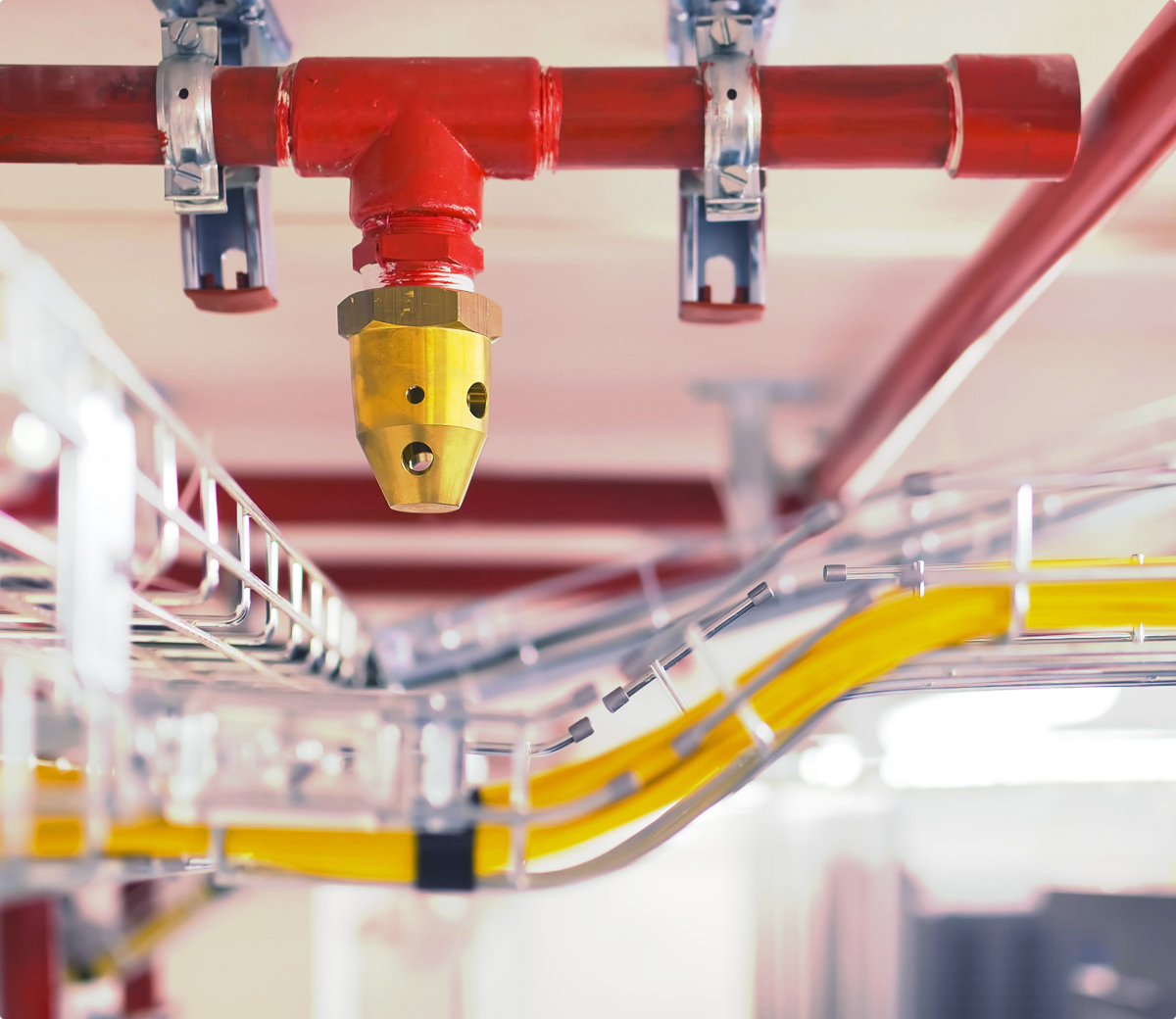
Close-up of a red fire sprinkler pipe with a brass sprinkler head attached to ceiling pipes.

HIPAA — Healthcare Physical Safeguards

The Health Insurance Portability and Accountability Act requires covered entities to implement physical security controls for areas where protected health information is stored or processed. Access control systems in healthcare environments must satisfy HIPAA physical safeguard requirements — with documented access management procedures, audit logging, and regular review of access rights. Fortis designs healthcare security systems with HIPAA documentation requirements built into every access control deployment.

FDIC, OCC & Banking Regulatory Guidance

Federal and state banking regulatory authorities — including the FDIC, OCC, and applicable state banking regulators — issue specific guidance on physical security standards for branch and vault environments. Institutions subject to safety and soundness examinations must demonstrate physical security program adequacy through documented access control programs, surveillance retention policies, and alarm system testing records. Fortis designs financial institution security systems with regulatory examination requirements as a primary design parameter.

State Privacy Laws & Local AHJ Requirements

Video surveillance systems must comply with state privacy laws governing recording in public and private spaces — requirements that differ significantly across every market Fortis serves. Local AHJ and municipal requirements govern alarm system registration, false alarm management programs, and monitoring station connectivity standards. Many jurisdictions require alarm permits and impose response fee schedules for repeated false dispatches. Fortis navigates the specific regulatory environment of your facility and jurisdiction as a standard part of every security system engagement.
Security compliance is not a one-time installation checklist. It is an ongoing program — and Fortis manages it with the same discipline we bring to every other life safety discipline we serve.
Contact Fortis

how it works

Assessed, installed, monitored, and managed — start to finish.
Every Fortis service relationship follows the same standard: thorough assessment, precise execution, clear documentation, and a team that stays accountable long after the work is done.
1

Security Assessment

Effective security design begins with a thorough vulnerability assessment — evaluating your facility's perimeter, access points, interior zones, operational patterns, and existing security infrastructure. Fortis identifies gaps, prioritizes risk, and designs a system architecture that addresses your specific threat profile.

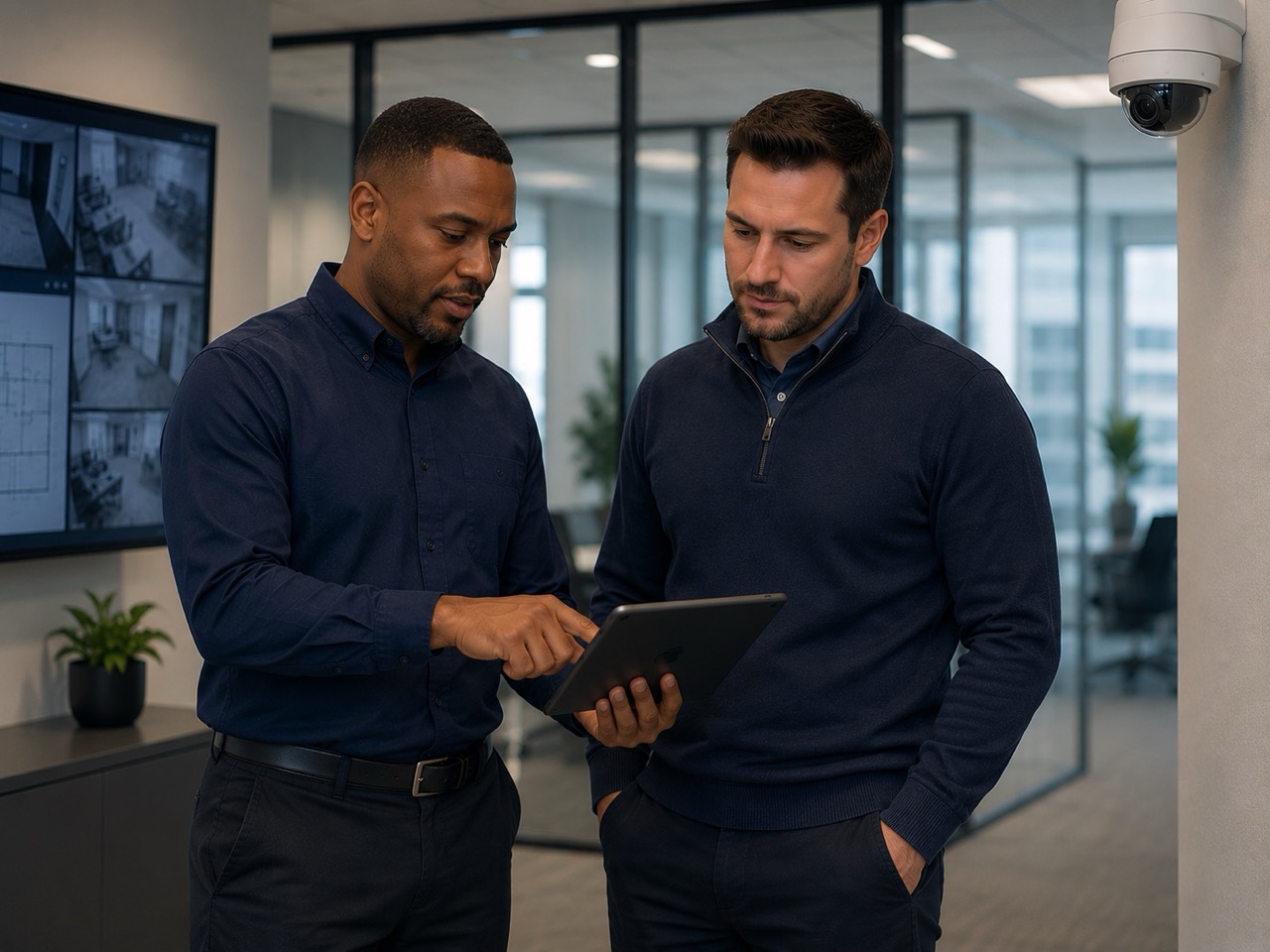
Two men in dark shirts review data on a tablet in a modern office with security cameras.
2

Access Control Design & Installation

From credential selection (key card, fob, mobile, biometric) through reader placement, door hardware, and software configuration, Fortis manages the full access control deployment — including integration with HR systems for credential lifecycle management and time-of-day access scheduling.

Two men in an office; one holds building plans, the other uses a security keycard at a door reader.
3

Video Surveillance Design & Installation

Camera placement is as much a science as a technology decision. Fortis designs surveillance coverage for maximum visibility with minimum blind spots — specifying camera type, lens, resolution, and mounting position based on the actual geometry and lighting conditions of each location. Storage configuration, retention policies, and remote access are all established during system design.

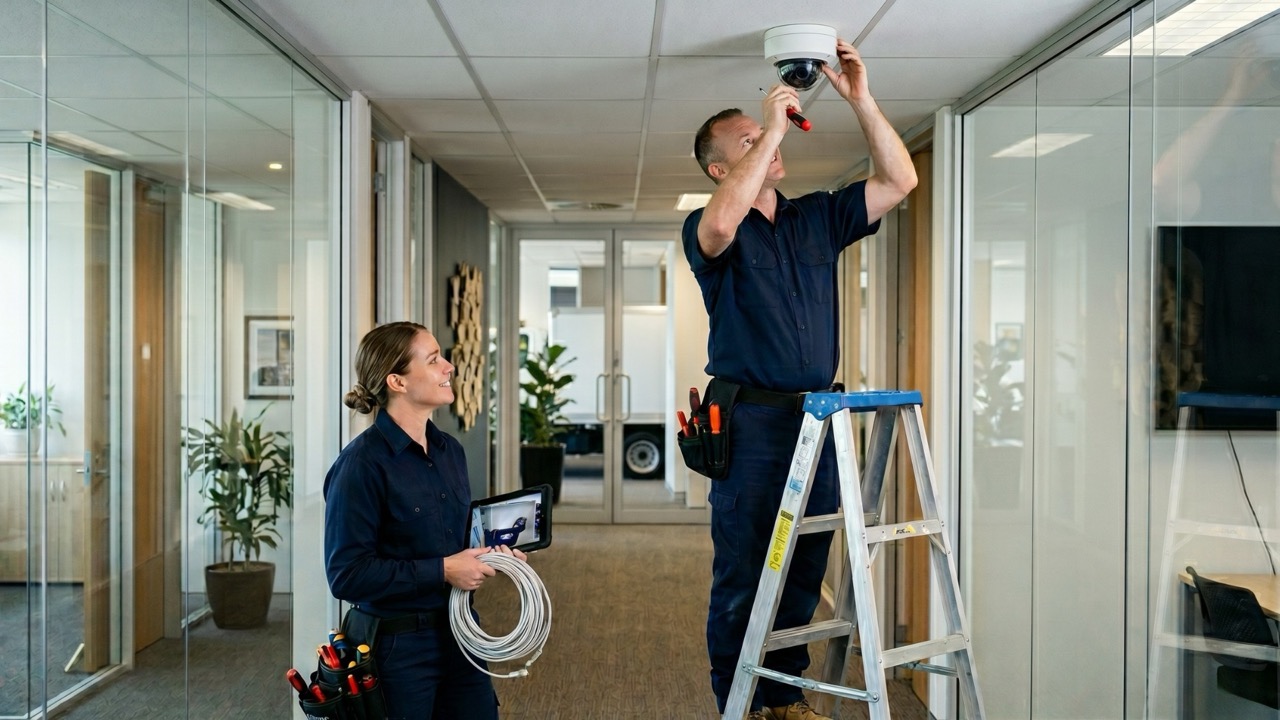
Technician on ladder installing security camera while another holds cable and tablet in office hallway.
4

Monitoring & Ongoing Management

Security systems require active management to remain effective. Fortis provides 24/7 monitoring services, system health checks, credential management support, and ongoing inspection and maintenance to ensure your security infrastructure performs reliably over time — not just on installation day.

Smiling woman wearing headset, holding and looking at a tablet in an office setting.

THE BUILDING BLOCKS OF MODERN SECURITY

Layered Protection, Engineered as One System.
Security technology isn't one-size-fits-all — and neither is Fortis. Our technicians are trained across dozens of access control, surveillance, and detection platforms, so we integrate with what you already have instead of forcing a replacement. Flexibility isn't a limitation on what we can build. It's the foundation.

Compatible With the Systems You Already Run

Alertus logo with yellow concentric arcs above black text on a white background.
Avigilon company name in blue uppercase letters with stylized A and G.
Accutech logo with circular design and text Healthcare Security Solutions below.
Axis Communications logo with black text and a yellow and red triangular symbol.
Company logo of ACCENTRA above a line and ASSA ABLOY below it.
BluBox logo with text Security Re-Imagined in blue and white.
American Dynamics logo
Logo with dark blue shape on left and light blue stylized letters RF on right with light blue background.
ButterflyMX logo with a colorful butterfly icon and black text on a white background.
Red DSC logo with three horizontal stripes through the letters.
Comelit logo with the tagline 'With You Always' beneath the brand name.
EAGL logo with black text and a red geometric wing shape on the right.
Bosch Security Systems logo with a silver emblem and red bold text BOSCH and black text Security Systems.
Brivo company logo with blue circular symbol and slogan simply better security.
DSX text inside an inverted triangle with black horizontal stripes and a red border.
Orange DW letters above black text DIGITAL WATCHDOG registered trademark.
HID brand logo with black letters on a blue rounded rectangle background.
Eagle Eye Networks logo
Black letters D, M, P with horizontal yellow lines through the D and P on a transparent background.
JERON electronic systems, inc. logo with stylized J and red cross graphic.
Hirsch logo
ExacqVision company logo with stylized letters in gradient blue tones.
Hanwha logo with three orange overlapping rings above the text and Samsung logo in blue oval.
LenelS2 company logo with stylized S icon and blue text.
Milestone company logo with a blue diamond icon and blue lowercase text.
Blue Pelco logo text on a black background with a registered trademark symbol.
March Networks logo with blue geometric icon to the left of the text.
Logo showing a stylized eye to the left of the text 'onSSI' in black and blue.
NAPCO Security Technologies logo with stylized red N icon to the left of black text.
Open Options Access Technology brand logo.
Logo with the text 'nwave' featuring stylized yellow double 'w' letters.
LiftMaster brand logo with white text on a red rectangular background.
SALIENT company wordmark with a red and gray geometric cube logo on the left.
Logo with two blue smartphone icons facing outwards and the text Teleportivity below them.
Vanderbilt wordmark logo with blue text and a curved underline.
Schlage brand logo with white text on a blue rounded rectangle background.
Software House logo with stylized blue horizontal bar and text.
Rhombus logo with a blue gradient diamond shape and black lowercase text.
PDK logo with orange and gray stylized letters.
SALTO logo with a blue stylized A and the phrase inspired access below in black text.
Ubiquiti Networks logo with stylized blue U symbol and gray text.
Zentra company logo with stylized green emblem and black lowercase text on white background.
Whatever the platform, every Fortis security system is built from the same interlocking components, each one closing a gap the others can't. Access Control governs who gets in. Biometric Verification ensures the credential and the person are one and the same. And Weapon Detection Technology adds a layer of protection that activates before a threat reaches the door. Together, they function as a single, coordinated defense — not a collection of standalone tools.
Person using fingerprint scanner with ID card on a security access device.

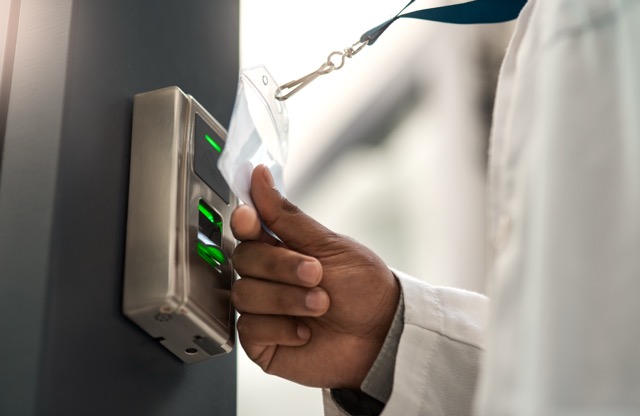
Access Control

Access control is the foundation every other security layer builds on. Credentials — key cards, fobs, mobile devices — are issued, scheduled, and revoked from a single platform, with every entry and exit logged to create a complete audit trail. But credentials carry an inherent weakness: a lost card, a shared fob, or a cloned badge grants access to whoever holds it, not necessarily the person who's authorized. Fortis designs access control systems engineered to close that gap from the start — not bolted on as an afterthought.
Hand placing finger on a fingerprint scanner for access control on a wall-mounted device.

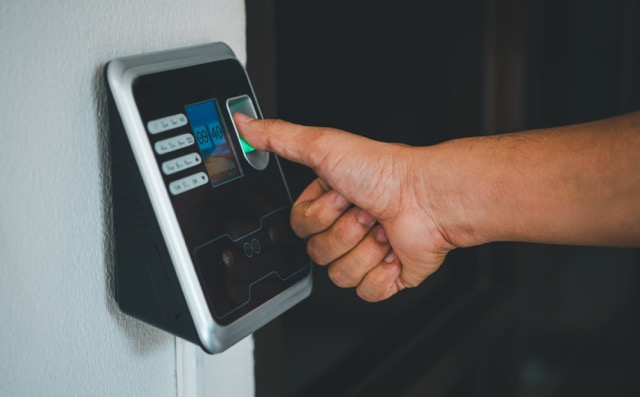
Biometric Verification

Biometric systems solve the problem access control alone cannot: verifying identity, not just credentials. Using fingerprint, facial, or retina recognition, biometric access ensures that entry is granted to the person — not the card, code, or phone they happen to be carrying. Because biometric markers can't be lost, shared, or stolen the way physical credentials can, they provide a faster, more accurate, and more secure layer of verification for the access points that matter most.
Security camera detects a man holding a handgun labeled as suspect 1 in a building lobby.

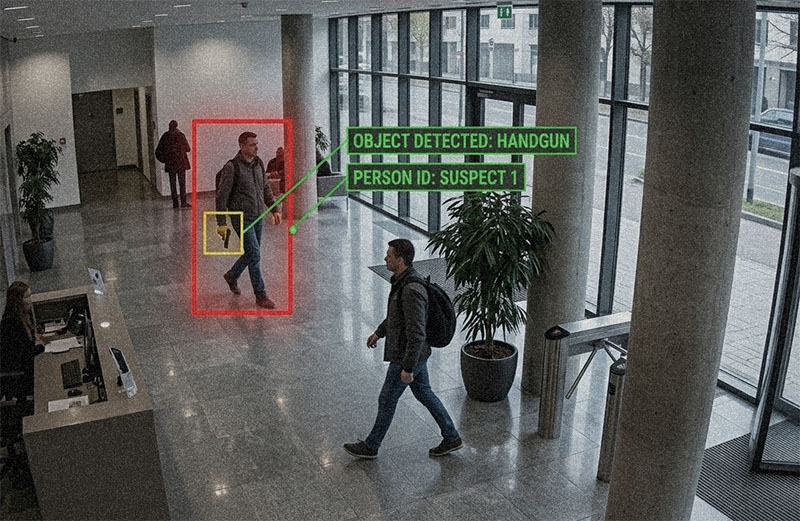
Weapon Detection Technology

Modern threat detection systems use AI-powered sensor and radar technology to identify weapons before they reach an entry point — flagging a threat in seconds, not after the fact. These systems integrate directly with existing access control, surveillance, and notification infrastructure, triggering automated response protocols — alerts, lockdown sequences, and direct communication with emergency services — the moment a threat is confirmed. For facilities where early detection is critical, this technology adds a proactive layer of protection that traditional cameras and access control cannot provide on their own.
Contact Fortis

FREQUENTLY ASKED QUESTIONS

FAQs about security systems
We get asked a lot of questions about our Commercial Security Systems — here are some of the most common.
What is access control, and how does it work?
Access control is a security technology that regulates who can enter specific areas of a facility, when they can enter, and what level of access they are granted. Modern access control systems use electronic credentials — key cards, fobs, mobile devices, or biometric identifiers — that are verified by readers at each controlled entry point. When a valid credential is presented, the reader communicates with the access control software to verify authorization and release the door. Every access event is logged, creating a complete audit trail of facility entry and exit activity.
How many cameras does my facility need?
Camera count is determined by the facility's layout, the specific areas requiring coverage, lighting conditions, and the resolution required for useful documentation. A proper security assessment evaluates every access point, high-value area, and potential blind spot to determine the camera count and placement required for comprehensive coverage. Fortis conducts site-specific assessments rather than applying generic formulas — because the right number of cameras depends on your facility, not an industry average.
Can security systems integrate with fire alarm systems?
Yes — and for most commercial facilities, integration is highly recommended. Integrated fire and security systems allow access control doors to release automatically during a fire alarm, elevator recall to engage, and security cameras to orient toward alarm zones for real-time situational awareness. Fortis, as a full-service fire and life safety provider, designs and manages integrated systems that function as a unified protection platform — not as disconnected components that have to be manually coordinated during an emergency.
What is 24/7 security monitoring, and why does it matter?
24/7 security monitoring connects your facility's security system to a central monitoring station that receives alerts in real time and initiates the appropriate response — notifying on-site security personnel, contacting law enforcement, or escalating to facility management — at any hour, without requiring a person on-site to identify and act on the event. For facilities that are unoccupied overnight, remotely managed, or operating with minimal after-hours staff, monitored security is the critical link between detection and response.
How long is security camera footage retained?
Retention requirements vary by facility type, jurisdiction, and specific regulatory obligations. Most commercial facilities retain video for 30 to 90 days, with longer retention required in certain regulated environments (financial institutions, healthcare, government facilities). Fortis configures storage and retention policies during system design, based on your specific compliance requirements and operational needs.
What is the difference between a monitored and unmonitored security system?
An unmonitored security system will detect and alarm locally — triggering sirens and recording activity — but does not notify anyone unless a person on-site identifies the alert and takes action. A monitored system connects to a central station that receives alarm signals, verifies the event, and dispatches an appropriate response, even when the facility is unoccupied. For commercial facilities, monitored security is the standard — an unmonitored system creates the illusion of protection without the response capability that makes protection real.

WHY CHOOSE FORTIS for security systems

The Fortis Difference
Security systems protect what insurance policies can't fully replace: the safety of your people, the continuity of your operations, and the trust that your facility's stakeholders place in your management. A system that isn't properly designed, maintained, and monitored is a liability dressed up as a solution. A fire alarm system is only as reliable as the expertise behind its design, installation, and ongoing maintenance. In an emergency, there is no time to discover that the system wasn't tested properly, the panel wasn't programmed correctly, or the monitoring pathway failed silently three months ago.

Fortis operates through a national network of regionally rooted fire and life safety companies — meaning the security systems we design are built for the specific regulatory environments and threat profiles of each community we serve.

Fortis keeps watch so you can focus on the future.
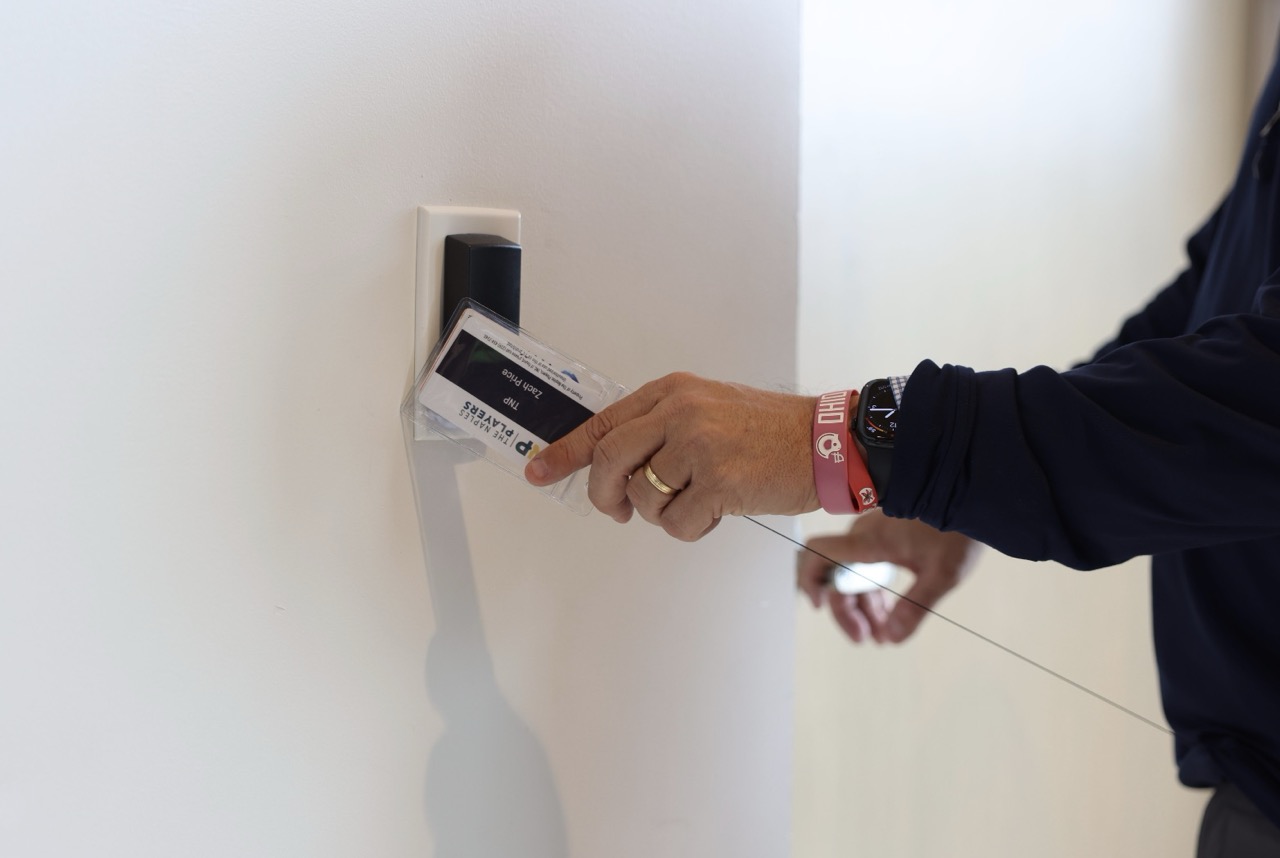
Smart access control.

Credential management, scheduling, and entry point control from a single, manageable interface — with audit-ready documentation of every access event.

High-definition surveillance.

Camera systems designed for your facility's specific geometry and lighting conditions, with storage and retention configured for your compliance requirements.

Integrated protection.

Security systems that work in concert with fire and life safety infrastructure — because emergencies don't stay in one lane, and your protection platform shouldn't either.

Service Area

security system service coverage

Fortis Fire & Safety operates through a national network of regionally embedded fire and life safety companies — delivering integrated security expertise in every market we serve, backed by the resources of a premier national organization.


For national account inquiries, contact our National Accounts team.
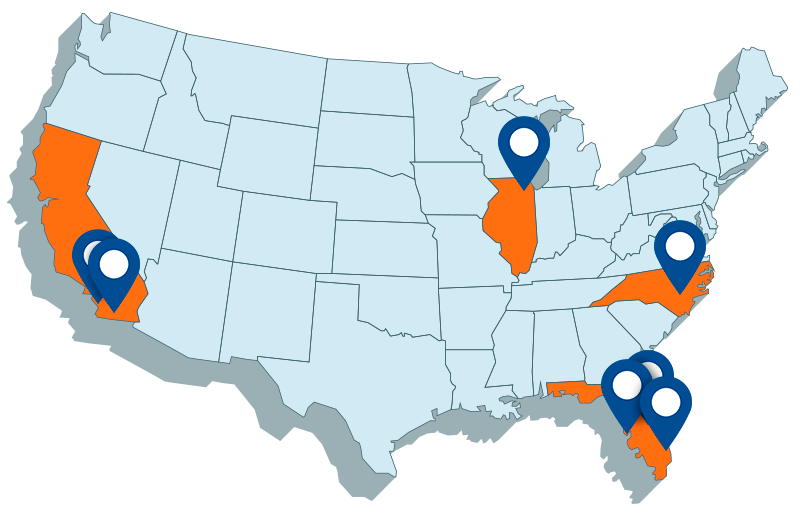
Map of the US highlighting California, Illinois, North Carolina, and Florida with blue location pins.

CJ Suppression

205 Lewis Court
Corona, CA 92882

visit site >

VFS Fire & Security Services

501 W. Southern Avenue
Orange, CA 92865

visit site >

LaMarco Systems

425 Huehl Rd Building 5
Northbrook, IL 60062

visit site >

Diversified Systems, Inc.

1103 Great Falls Court
Knightdale, NC 27545

visit site >

Integrated Fire & Security Systems

1970 Dana Drive
Fort Myers, FL  33907

visit site >

Lifesafety Management

2017 Corporate Drive
Boynton Beach, FL 33426

visit site >

Piper Fire Protection

13075 US Hwy 19 N
Clearwater, FL 33764

visit site >

TOTAL VIGILANCE. ZERO BLIND SPOTS.

Talk to a Fortis security specialist about protecting your people, assets, and perimeter.

Fortis Family of Brands
Local expertise, national strength
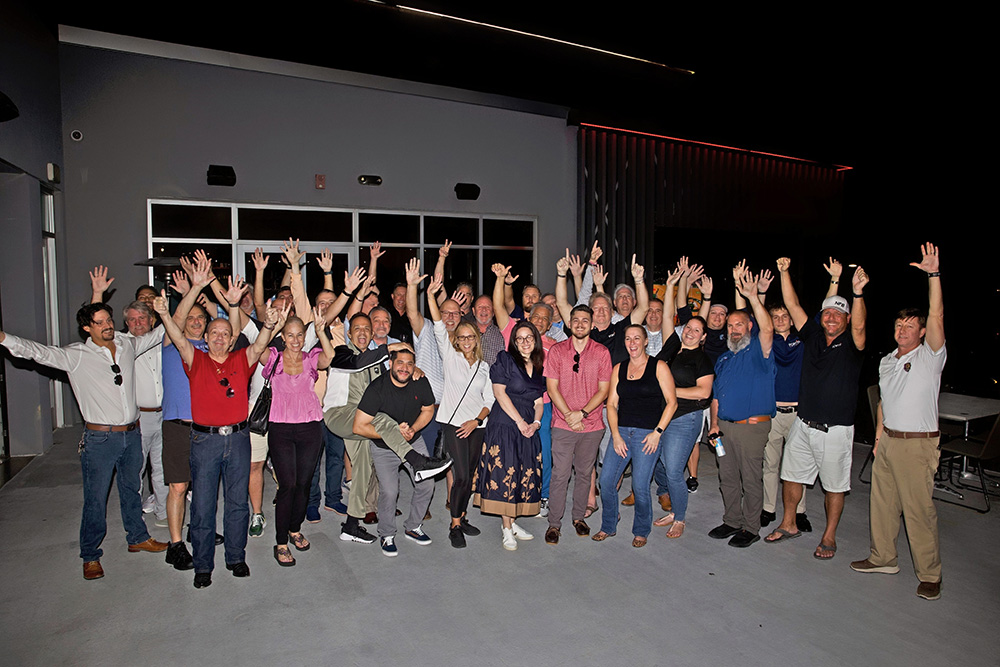
Large group of people outside at night with raised hands, smiling and posing for a photo.
The best of both — in every market we serve.

Trust is built locally. It lives in the technician who knows your building, knows your local codes, and shows up when something goes wrong at midnight. It lives in the relationship between a fire protection company and the community it has served for decades.


But capability is built at scale. The training standards, the technical resources, the purchasing power, the shared knowledge of a unified national organization — these are the things that make a local provider exceptional rather than merely adequate.

Fortis was built on this belief.

Our network of regionally rooted fire and life safety companies delivers genuine local expertise in every market we serve — technicians who know the regional AHJs, the local codes, and the specific demands of the facilities in their community. Behind each of them stands the full weight of a premier national organization.

You build. You create. You push the world forward.
We protect it all.

CJ Suppression logo with stylized flames above oval containing 'CJS' text, tagged as a Fortis brand.Diversified Systems, Inc. logo with a downward triangle and horizontal line, A Fortis brand.IFSS logo with Integrated Fire and Security Solutions, a Fortis brand text.LSM shield logo with text LifeSafety Management, a Fortis brand on black background.Piper Fire Protection logo with a stylized water droplet and swoosh, labeled a Fortis brand.VFS logo with a triangular symbol above and text Fire & Security Services, A Fortis BrandLAMARCO SYSTEMS logo with text Life Safety & Integrated Security Solutions, a FORTIS brand.